What Is Conversational Marketing in Practice
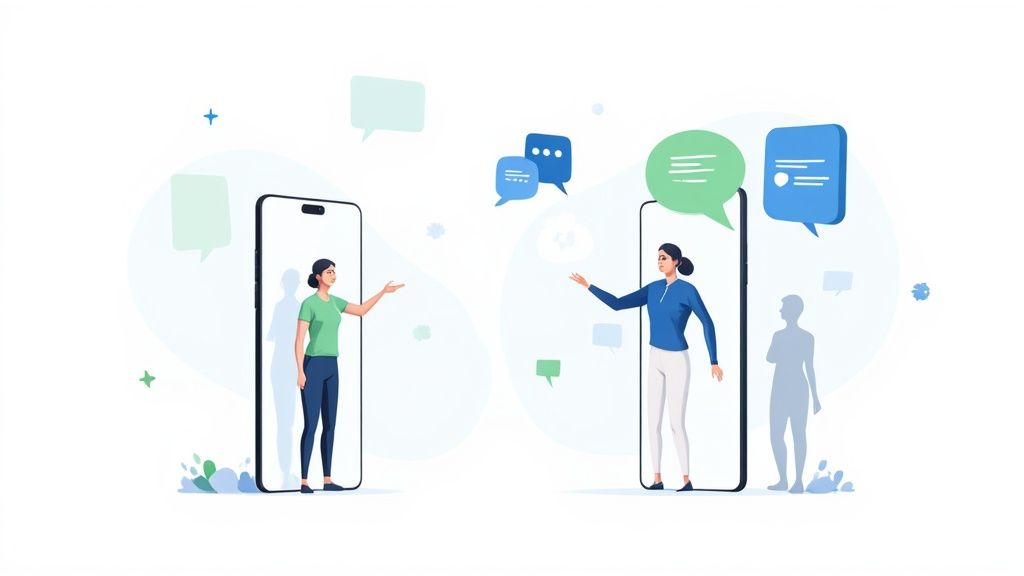
At its heart, conversational marketing is all about one thing: talking with your customers, not at them. It’s a shift away from the old-school, one-way broadcasts like ads and email blasts. Instead, it focuses on creating genuine, two-way dialogues in real-time using tools like website chat, messaging apps, and chatbots.
Think of it as the difference between shouting from a megaphone and having a friendly chat over a cup of coffee. One is disruptive; the other builds a real connection.
What Is Conversational Marketing, Really?
Let's cut through the jargon. Traditional marketing often feels like a billboard on a highway—a loud, one-way message aimed at everyone and no one in particular. You hope someone sees it and eventually acts on it.
Conversational marketing is completely different. It’s more like a helpful shop assistant who greets you at the door, asks what you're looking for, and guides you right to it. It’s about being helpful, right when someone needs it.
The whole idea is to meet customers where they already are—on your website, on social media, on their phones—and give them instant, valuable answers. Instead of forcing people down a rigid, predetermined sales funnel, you open up a direct line for them to ask questions and get help on their own schedule. This creates a far more natural and customer-friendly experience.
The image below really brings this concept to life, showing how marketing can be a helpful dialogue instead of a monologue.
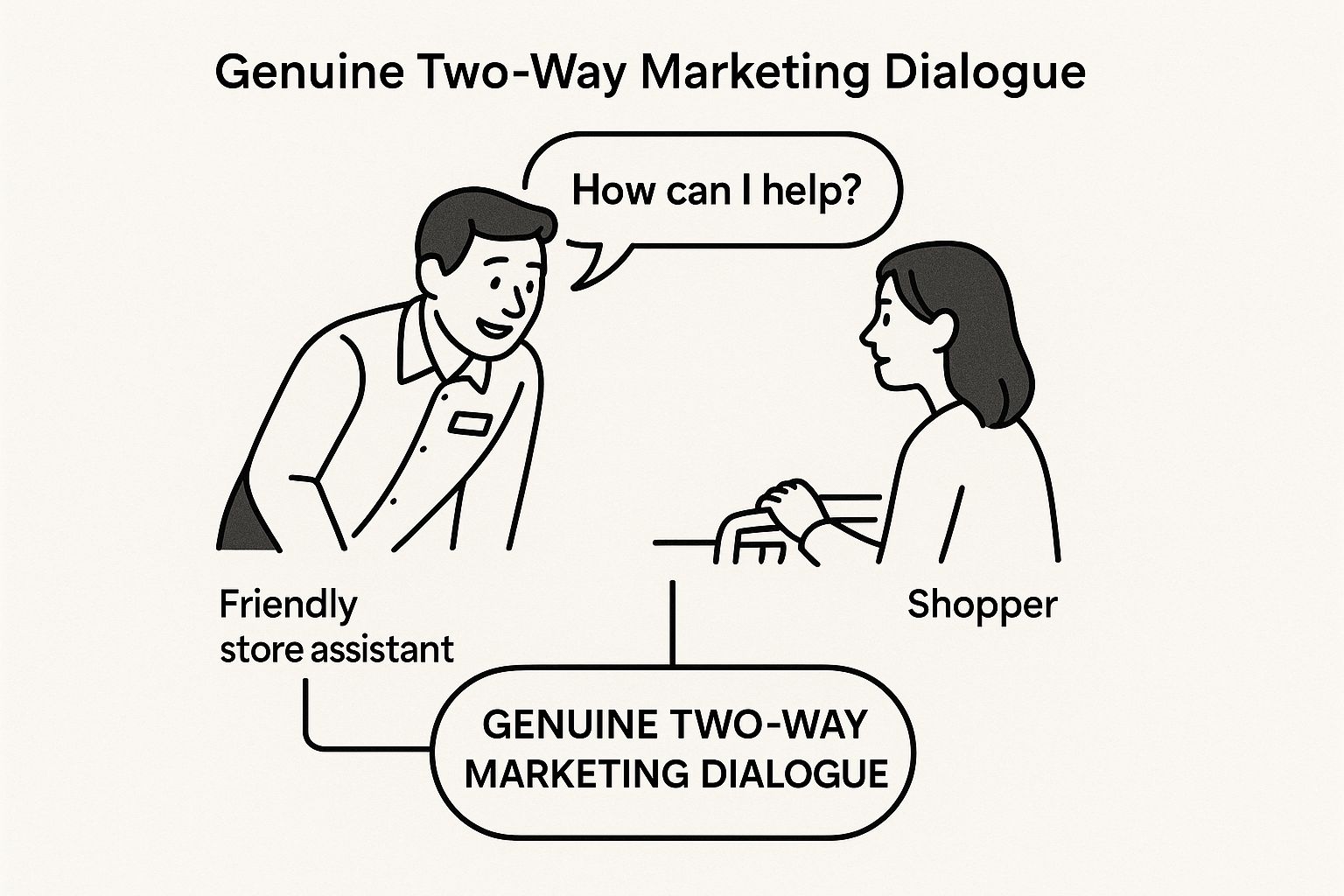
As you can see, it’s all about proactively engaging and helping people. That’s how you build trust and make it easier for them to decide to buy.
To better understand this shift, let's compare the old way with the new way.
Traditional vs Conversational Marketing
| Aspect | Traditional Marketing | Conversational Marketing |
|---|---|---|
| Communication | One-way broadcast (monologue) | Two-way dialogue |
| Pacing | Company's schedule | Customer's schedule (real-time) |
| Approach | General and broad | Personalized and one-to-one |
| Goal | Lead capture and qualification | Building relationships and helping |
| Customer Role | Passive audience | Active participant |
| Technology | Forms, landing pages, email | Chatbots, live chat, messaging apps |
The table makes it clear: this isn't just a new tactic. It's a fundamental change in how businesses view and interact with their customers.
The Shift From Monologue to Dialogue
The term conversational marketing was coined to capture this feedback-driven approach perfectly. It’s all about using real-time, one-on-one conversations to move buyers through your marketing and sales funnels. It turns marketing from a company-centric monologue into a customer-centric dialogue, putting the buyer firmly in the driver's seat.
By focusing on one-to-one conversations, businesses can gather valuable insights, address pain points instantly, and build stronger, more loyal relationships with their audience.
This doesn't just make customers happier. It also gives your business a direct pipeline of feedback to make your products, services, and overall experience even better.
Core Principles of This Approach
The real power of conversational marketing is its simplicity. It’s built on a few straightforward, customer-first principles.
- Be Available 24/7: Nobody wants to wait for answers. Use tools like AI chatbots to provide instant support anytime, day or night.
- Be Personal: Treat every customer like an individual. Tailor the conversation based on who they are, where they came from, and what they’ve done on your site before.
- Be Scalable: You can't hire enough people to talk to everyone one-on-one. Leverage technology to manage thousands of conversations at once without losing that personal touch.
Ultimately, conversational marketing isn't a standalone trick. It’s a key piece of a much larger puzzle. To make it truly effective, it should fit into a comprehensive omnichannel communication strategy that creates a seamless experience everywhere your customers interact with you.
Why Marketing Traded Its Megaphone for a Conversation
Marketing hasn't always been a two-way street. For a long time, it was more of a monologue, with brands essentially shouting at people from a soapbox. I like to call this the megaphone era.
Think about it: TV commercials, radio ads, and glossy magazine spreads were all about broadcasting a message as far and wide as possible. The hope was that if you yelled loud enough, someone would eventually listen. There was no real back-and-forth, no way for customers to ask questions or give feedback on the spot.
The Customer Took the Mic
Then came the internet, and the game completely changed. Power didn't just shift—it was a full-blown transfer from the corporation to the consumer. People were no longer just a passive audience; they now had a platform, a voice, and endless choices.
This new dynamic brought a whole new set of expectations. Customers started looking for more than just a product; they wanted a great experience to go with it. They craved speed, convenience, and a feeling that brands actually understood them. Suddenly, the old megaphone approach felt clunky, impersonal, and frankly, a bit rude.
The modern customer doesn't want a sales pitch; they want a helping hand. They expect answers right away and interactions that feel like they were meant just for them, not a generic blast sent to everyone.
This fundamental change in customer behavior created the opening for a new way of thinking about marketing. Businesses began to realize that to really connect with people, they needed to shut off the megaphone and start listening.
From Broadcasting to Building Relationships
Digital technology gave us the tools to finally have these one-on-one conversations at scale. Messaging apps, social media, and live chat are where we all spend our time, so it only makes sense for businesses to meet us there.
Instead of making people fill out a form and wait days for a reply, companies could now talk to them in real time. And that immediacy is everything—a whopping 79% of consumers say they expect an instant response when they reach out to a business online.
This is the world where conversational marketing was born. It's not just another trendy tactic; it’s a direct answer to how people actually want to communicate today.
- Instant Gratification: We all want answers now, not tomorrow. AI chatbots and live chat make that 24/7 "we're here for you" feeling a reality.
- A Personal Touch: Nobody likes feeling like a number. One-on-one chats allow for recommendations and solutions that feel tailored to you.
- A Smooth Ride: The less friction, the better. Meeting customers on the apps they already have open on their phones just makes life easier for everyone.
At the end of the day, the move from megaphones to messages was driven by a simple, timeless idea: business is about relationships, and you can't build a relationship without a good conversation. In a world where the customer is firmly in the driver's seat, the only way forward is to engage them in a real, helpful dialogue.
Your Conversational Marketing Toolkit
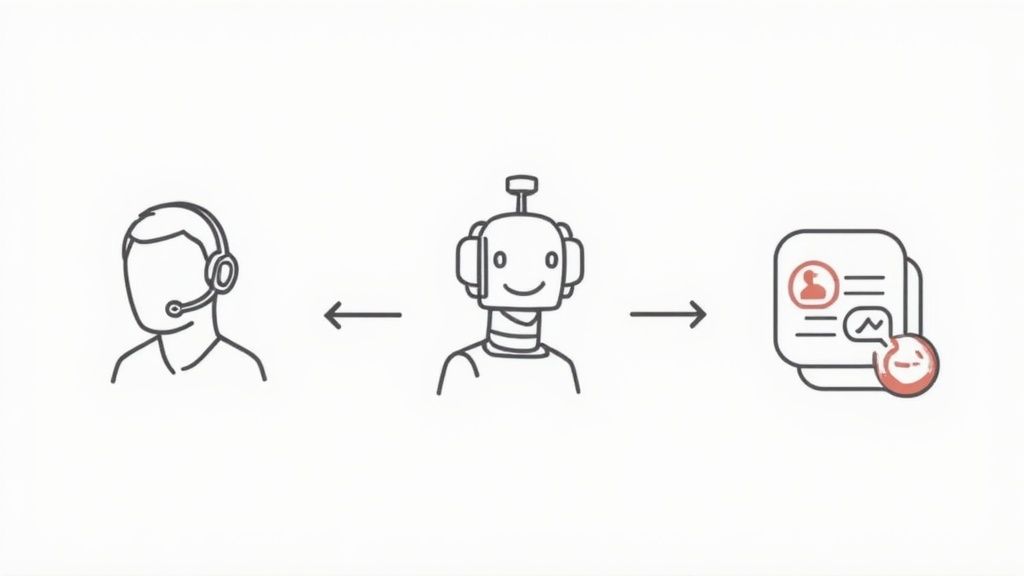
So, how do you actually make these one-on-one conversations happen? It’s not about one magic piece of software. It's more like a well-stocked toolkit, where each tool has a specific job but they all work together to create a smooth experience.
Knowing what these tools are and how they connect is the secret to building a system that feels genuinely helpful instead of clunky and robotic. They're the engines that bring the whole idea of conversational marketing to life.
Live Chat: The Human Connection
The most straightforward tool in the box is live chat. This is simply a real person from your team—sales, support, you name it—chatting directly with a website visitor. Think of it as the digital version of a friendly employee approaching a customer in a store to ask if they need help finding anything.
Live chat is fantastic for tackling tricky questions, building a personal connection, and adding a human touch that bots just can't match. When someone has a really specific problem or is on the verge of a major purchase, a quick, empathetic chat with a real person can be the deciding factor.
AI Chatbots: Your 24/7 Frontline Team
Of course, your team can't be online 24/7. That’s where AI chatbots step in. These are your tireless virtual assistants, ready to jump in at any hour. They can answer frequently asked questions, help qualify new leads, and even schedule demos, all on their own.
A smart chatbot handles all the routine stuff, which frees up your people to focus on the more complex, high-value conversations. Most importantly, they make sure no visitor is left hanging. They provide the instant answers that people have come to expect. And when a question gets too tough, the best chatbots know exactly when to pass the conversation over to a human teammate.
A great conversational strategy is a partnership between humans and AI. The chatbot handles the initial interaction and common questions, and a human agent steps in for nuanced, high-touch support, creating a seamless and efficient customer experience.
Messaging Apps: Meeting Customers Where They Are
The final piece of the puzzle is reaching people on the platforms they already use every single day. This means integrating with messaging apps like WhatsApp, Facebook Messenger, and even Instagram DMs. Instead of making people come to your website to talk, you go to them.
This approach makes everything incredibly convenient for your customers. They can ask a question while waiting in line for coffee and interact with your brand just like they would with a friend. It removes friction and makes your business feel far more approachable and modern. As you build out your plan, understanding how a chatbot for marketing works across these different apps is key to reaching more people and keeping them engaged.
Here’s the rewritten section, designed to sound like an experienced human expert.
How Talking to Customers Drives Real Results
Think about the last time you filled out a "Contact Us" form. You sent your message into the void and waited... and waited. Moving away from this one-way communication isn't just a nice idea; it's a game-changer for your bottom line.
When you start a real conversation the moment someone shows interest, you fundamentally change your sales process. It stops being a long, drawn-out marathon and becomes a quick sprint to the finish line. A curious visitor with a question about pricing can get an answer right away, not three days later in an email they might ignore. This is how you shrink a sales cycle from weeks down to a matter of minutes.
Better Leads and More Conversions
It's not just about speed, though. Conversational marketing is also a powerful filter. By using a chatbot to ask a few smart, qualifying questions upfront, you can instantly tell the difference between a window shopper and a serious buyer.
This means your sales team stops wasting time chasing dead ends. Instead, they get to talk to people who are actually ready to make a decision. The results speak for themselves. Teams using these tools have seen their website conversion rates jump by 33% and their number of qualified leads increase by 22%. It gets better—automating these conversations can even lead to a 10% revenue bump in less than a year. If you're curious about the numbers, Mailmodo has a great breakdown of how these tools drive growth.
When you engage with people instantly and personally, you remove all the little points of friction that make them give up and leave. Every question you answer builds the momentum needed to turn a curious visitor into a paying customer.
Deeper Loyalty and Happier Customers
The impact doesn't stop once a deal is closed. Imagine offering your customers help whenever they need it—even at 10 PM on a Sunday. An AI-powered chatbot makes that possible, and that kind of 24/7 support completely transforms the customer experience.
When a customer gets an immediate solution instead of a "we'll get back to you during business hours" message, you build incredible trust. It shows you respect their time and are invested in their success. This creates a stronger bond, which leads to better retention, more positive reviews, and customers who are happy to recommend you. Suddenly, customer support isn't just a cost—it's one of your best tools for growth.
Conversational Marketing in the Real World

It’s one thing to talk about theory, but seeing conversational marketing in action is where you really get it. This isn't just a strategy for giant corporations. Businesses of all sizes are putting these tools to work to solve real-world problems and give their customers a much better experience.
Let's break down how this actually looks in a couple of different industries, starting with the fast-paced world of online shopping.
E-Commerce Personal Shopping Assistant
Picture an online clothing store. They have a classic problem: a ton of abandoned carts. Shoppers add stuff to their basket but then bail before checking out. Why? Often, they're just not sure about the size, the fit, or if they've found the perfect item.
This is where a simple AI chatbot can completely change the game. By adding a virtual shopping assistant to their website, the store can step in at that critical moment. When a visitor lands on a product page, the bot might pop up and ask, "Need help finding the right size?"
That one question opens the door to a genuinely helpful conversation.
- Product Discovery: The bot can act like a personal stylist, asking about style preferences, what the occasion is, or favorite colors to recommend the perfect dress or shoes.
- Sizing Guidance: It can ask for measurements or even compare sizing to other brands the customer already owns. This instantly clears up a major point of friction and builds confidence to hit "buy."
- Reduced Friction: If a size is out of stock, the bot doesn't just leave the customer at a dead end. It can suggest similar styles or offer to send a notification when the item is back in stock, saving a sale that would have been lost.
This kind of real-time, helpful chat turns what can be a frustrating solo shopping trip into a guided, supportive one. It directly tackles the reasons people abandon their carts in the first place.
The core idea is to replicate the best parts of an in-store experience online. A great chatbot doesn't just answer questions; it anticipates needs and guides the customer, making the path to purchase smooth and enjoyable.
B2B Lead Generation and Qualification
Now, let's switch gears to a B2B software company. Their challenge is completely different. They get decent traffic to their site, but most visitors are just kicking the tires. This means their sales team wastes a ton of time chasing leads that are a poor fit, while the really good prospects get lost in the noise.
For them, a chatbot becomes a lead qualification machine. Instead of relying on a passive "Contact Us" form, the bot strikes up a conversation with people browsing the site.
It asks a few smart, strategic questions to figure out who the visitor is and what they need. Are they a small startup or a big enterprise? What specific problem are they trying to solve? Based on the answers, the bot can qualify them as a genuine lead on the spot. For high-value prospects, it can even tap into the sales team's calendar and book a demo right then and there.
In the real world, businesses are leveraging advanced personalized chatbot solutions to engage customers directly, providing instant support and tailored interactions that drive growth. This approach transforms a website from a static brochure into an active, intelligent lead-generation engine.
The financial impact here is staggering. The global market for this type of interaction is projected to explode from $41 billion in 2021 to around $290 billion by 2025. This incredible growth is happening because businesses are finally integrating chat, voice, and messaging to create a buying journey that just works better for everyone.
Implementing Your First Conversational Strategy
So, you're ready to dive into conversational marketing? It can feel like a massive project, but the secret is to start small. Don't try to boil the ocean. A simple, focused plan is the best way to get started, prove the concept works, and then build on your success. Let's walk through how to launch your first strategy, using a tool like Yoonoo as our guide.
The first, and most important, step is to pick one single goal. What’s the most pressing problem you want to solve? Maybe you’re losing leads after hours, or perhaps your support team is drowning in the same simple questions over and over. If you try to fix everything at once, you'll end up fixing nothing.
Choose one specific pain point to address first. A focused goal—like booking 15% more sales demos through your website—provides a clear target to measure your success against.
Mapping Out the Conversation
With your goal in mind, it's time to put yourself in your customer's shoes. What are the first five or ten questions someone asks when they land on your website? These common queries are gold—they’re the perfect foundation for your chatbot’s script.
Think about the usual suspects:
- Pricing Questions: "How much does your basic plan cost?"
- Feature Inquiries: "Can your software integrate with my CRM?"
- Support Issues: "How do I reset my password?"
- Next Steps: "How can I book a demo with a sales rep?"
You’re not trying to script out every conceivable conversation. The idea is to nail the most common starting points so your bot can deliver instant, genuinely helpful answers. From there, you can design a simple conversation flow that gently guides visitors toward the goal you just set.
This is where a tool like Yoonoo comes in handy. It lets you visually build these automated dialogue paths without having to touch a line of code.
As you can see, you can map out how a conversation should flow, connecting a visitor's question to the right answer or action. This visual approach is a game-changer for creating an experience that feels natural and effective. Platforms like this are designed to make setting up automated direct messages a breeze, even if you’re not a developer.
Finally, you have to measure what matters. Keep a close eye on your key metrics: the number of conversations started, how many leads you capture from chat, and customer satisfaction scores. Watching these numbers will tell you exactly what’s working and what needs tweaking as you go.
Common Questions About Conversational Marketing
When businesses first look into conversational marketing, a few key questions always seem to pop up. It’s a shift from the old way of doing things, so it's natural to have some doubts. Let's clear the air and tackle some of the most common ones.
Is This Just for Big Companies?
Absolutely not. While you might see big brands using chatbots to handle thousands of customer questions, this approach is a game-changer for small businesses too.
Think about it: a small team can use a chatbot to offer 24/7 support, grab leads when everyone’s gone home for the day, and give customers that instant, personal touch that used to be reserved for companies with huge call centers. The tools available today are affordable and can grow right along with you.
The point isn't to replace your team—it's to make them stronger. Conversational tools take care of the routine stuff so your people can focus on the conversations that really build relationships.
Will Chatbots Make Our Human Team Obsolete?
This is probably the biggest misconception out there. The goal here is teamwork, not replacement. A chatbot is like your front-of-house staff; it's the first point of contact.
They are fantastic at answering simple, common questions in a heartbeat. This frees up your human experts to jump in on the tricky problems where a real conversation, empathy, and deep knowledge are essential. The best strategies blend bots and humans to create a system that’s faster for the business and genuinely more helpful for the customer.
How Do We Actually Measure the ROI?
You track the return on investment with the same hard numbers you use for any other business activity. The key is to focus on metrics that directly tie back to growth and revenue.
Here's what to watch:
- More Qualified Leads: How many new, sales-ready leads are coming in through your chat?
- Better Conversion Rates: Are more people signing up or buying after having a conversation on your key pages?
- Faster Sales Cycles: How much time are you shaving off the journey from a prospect's first "hello" to a closed deal?
- Happier Customers: Keep an eye on your customer satisfaction (CSAT) scores. Are they climbing? Is your support team getting fewer repetitive tickets?
Ready to start having better conversations and see what they can do for your business? With Yoonoo, you can build a smart AI chatbot for your website in about five minutes, and you don’t need to write a single line of code. Start for free and see how easy it is.