12 Best Website Personalization Tools
In a competitive online market, a generic website experience is a missed opportunity. Your visitors expect content, offers, and interactions that feel like they were made just for them, and failing to deliver can send them straight to a competitor. This is the core problem solved by website personalization tools. These powerful platforms enable you to move beyond a one-size-fits-all approach and create dynamic, one-to-one digital experiences for every user.
By leveraging real-time data to adjust content, present relevant product recommendations, and deliver targeted messages, you can dramatically improve engagement, lift conversion rates, and build stronger customer relationships. To truly understand the impact and application of tailoring experiences, delve into these 7 powerful behavioral targeting examples for 2025 before exploring the tools that make it possible.
This guide is designed to help you find the right solution for your specific needs. We’ve analyzed the 12 best website personalization tools available, breaking down their key features, ideal use cases, and practical limitations. Each review includes screenshots and direct links to help you compare your options and make an informed decision quickly. Forget the marketing fluff; this is a straightforward breakdown to help you choose the best platform to transform your website.
1. Optimizely Personalization
Optimizely Personalization is an enterprise-grade platform that stands out by tightly integrating A/B testing with personalization. This connection allows marketers to not just create tailored experiences but also scientifically prove their impact on key metrics, which is a major advantage for demonstrating ROI. It's a robust solution for businesses that want to validate every personalization decision with hard data.
Key Features & Use Cases
This tool is ideal for creating dynamic, targeted campaigns. For example, an e-commerce site can use the visual editor to show a "Free Shipping" banner exclusively to first-time visitors from a specific geographic region. You can then A/B test this personalized banner against a generic welcome message to see which one drives more conversions. The audience-building capabilities are powerful, combining first-party data (like purchase history) with real-time behavior to deliver highly relevant content.
Why it's on this list: Optimizely’s strength is its "Experimentation-in-Personalization" feature. It moves personalization from a guessing game to a data-driven strategy, making it one of the most powerful website personalization tools for performance-focused teams.
Implementation & Pricing
- Implementation: Deployed via a single JavaScript snippet, which simplifies the initial technical setup.
- Pricing: Not publicly available. It is geared towards enterprise clients, so expect a significant investment based on a custom quote.
| Pros | Cons |
|---|---|
| Strong A/B testing integration proves ROI | Enterprise-level pricing is not for small businesses |
| Mature documentation and support | Steeper learning curve for advanced features |
Learn More: https://www.optimizely.com/personalization/
2. Dynamic Yield by Mastercard
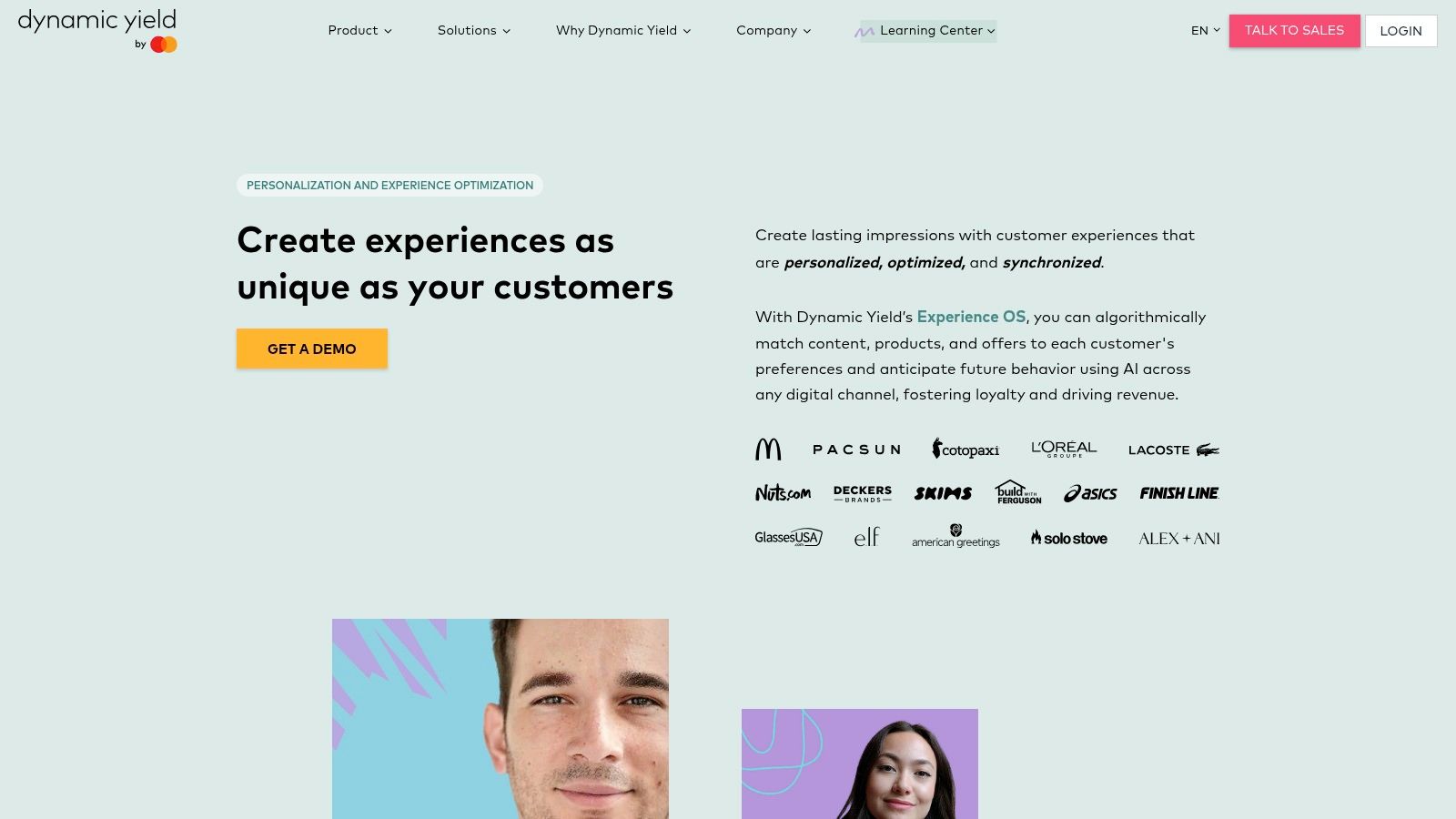
Dynamic Yield by Mastercard positions itself as an "Experience OS," offering a comprehensive platform that unifies personalization across web, apps, and email. Its core strength lies in its ability to create cohesive, one-to-one customer journeys using real-time data. This allows businesses to move beyond simple A/B testing and deliver truly individualized experiences at every touchpoint, from product recommendations to behavioral messaging.
Key Features & Use Cases
The platform excels at sophisticated e-commerce personalization. For instance, an online retailer can leverage its powerful recommendation engine to show a returning shopper products based on their past browsing behavior and purchase history, while simultaneously displaying social proof messaging like "20 people bought this today" to create urgency. Its real-time segmentation and audience explorer allow marketers to identify and target niche customer groups with custom overlays or promotional offers.
Why it's on this list: Dynamic Yield's unified approach to creating a single customer view makes it one of the most powerful website personalization tools for omnichannel brands. Its ability to synchronize experiences across different channels is a key differentiator.
Implementation & Pricing
- Implementation: Typically deployed with a JavaScript snippet, though more complex integrations are supported for deep data synchronization.
- Pricing: Custom quote-based. It is a premium solution aimed at enterprise-level businesses with significant traffic and revenue.
| Pros | Cons |
|---|---|
| Strong omnichannel personalization capabilities | Quote-based pricing can be a significant investment |
| Robust audience analytics and deep targeting | Primarily targeted at enterprise clients, not SMBs |
Learn More: https://www.dynamicyield.com/
3. Adobe Target
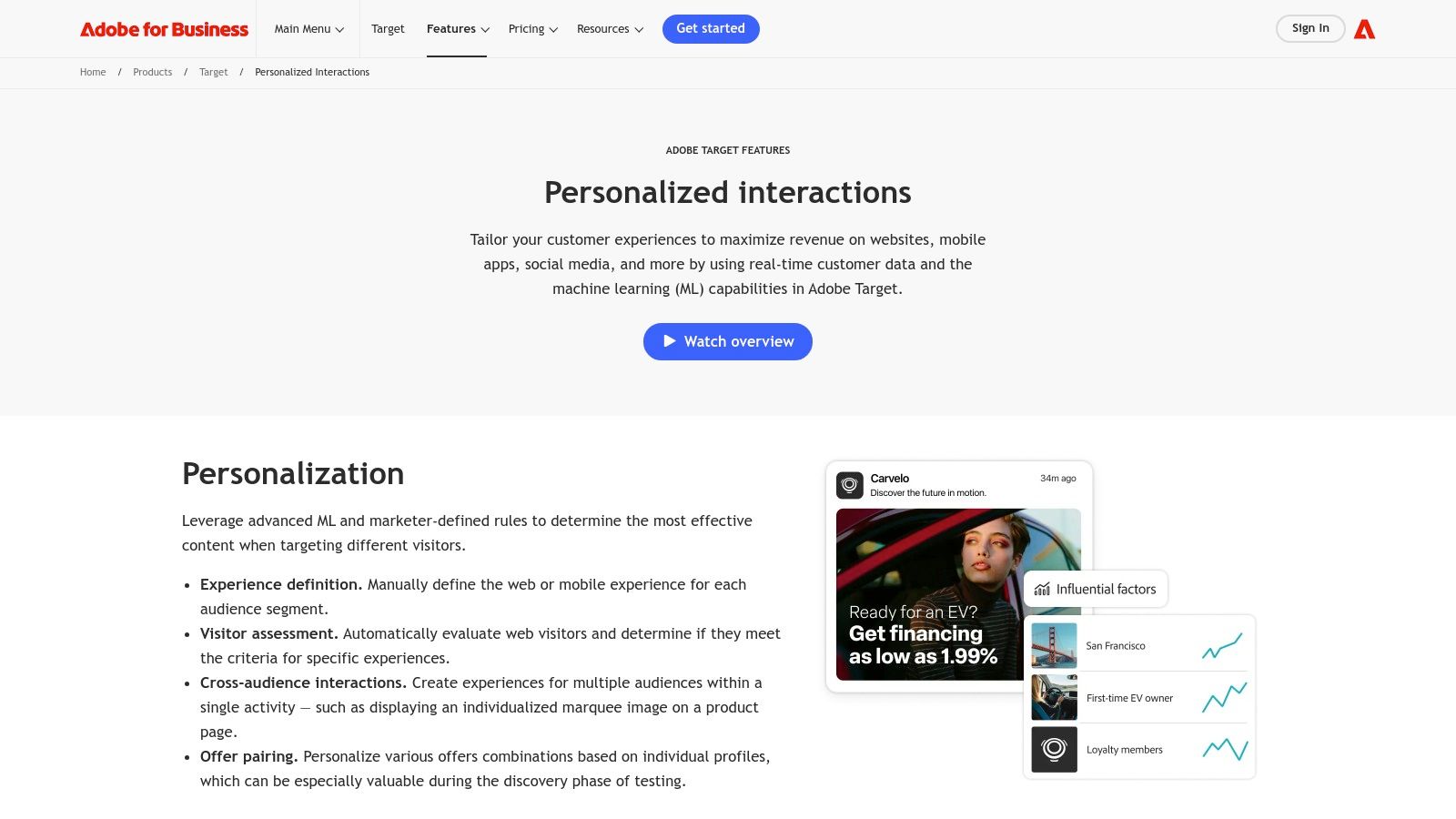
Adobe Target is a powerful enterprise-level solution that excels at delivering personalized experiences at scale. Part of the Adobe Experience Cloud, it leverages rules-based and AI-driven targeting to automate content and product recommendations. Its main strength lies in its deep integration within the Adobe ecosystem, making it a go-to choice for large organizations already invested in Adobe’s marketing stack.
Key Features & Use Cases
Adobe Target is well-suited for complex personalization strategies across multiple touchpoints. For instance, a retailer can use the Visual Experience Composer to create a multi-page activity that shows a unique homepage banner, custom product recommendations on category pages, and a tailored offer in the cart, all for a single audience segment. Its AI-powered "Auto-Target" feature automatically identifies and serves the best-performing experience to each visitor, optimizing for conversions without manual oversight.
Why it's on this list: Adobe Target's ability to seamlessly connect with Adobe Analytics and Adobe Experience Manager makes it one of the most cohesive website personalization tools for enterprises. This integration provides a unified customer profile for delivering consistent, data-rich experiences.
Implementation & Pricing
- Implementation: Often part of a broader Adobe Experience Cloud implementation. It can be deployed via SDKs for mobile apps and server-side APIs.
- Pricing: Not publicly available. Pricing is designed for enterprise contracts and requires a custom quote based on usage and integrations.
| Pros | Cons |
|---|---|
| Tight integration with Adobe Experience Cloud | Pricing requires enterprise-level contracts |
| Extensive features with strong governance and AI | Implementation is complex, often needs Adobe ecosystem |
Learn More: https://business.adobe.com/products/target/personalized-interactions.html
4. Salesforce Marketing Cloud Personalization (formerly Interaction Studio/Evergage)
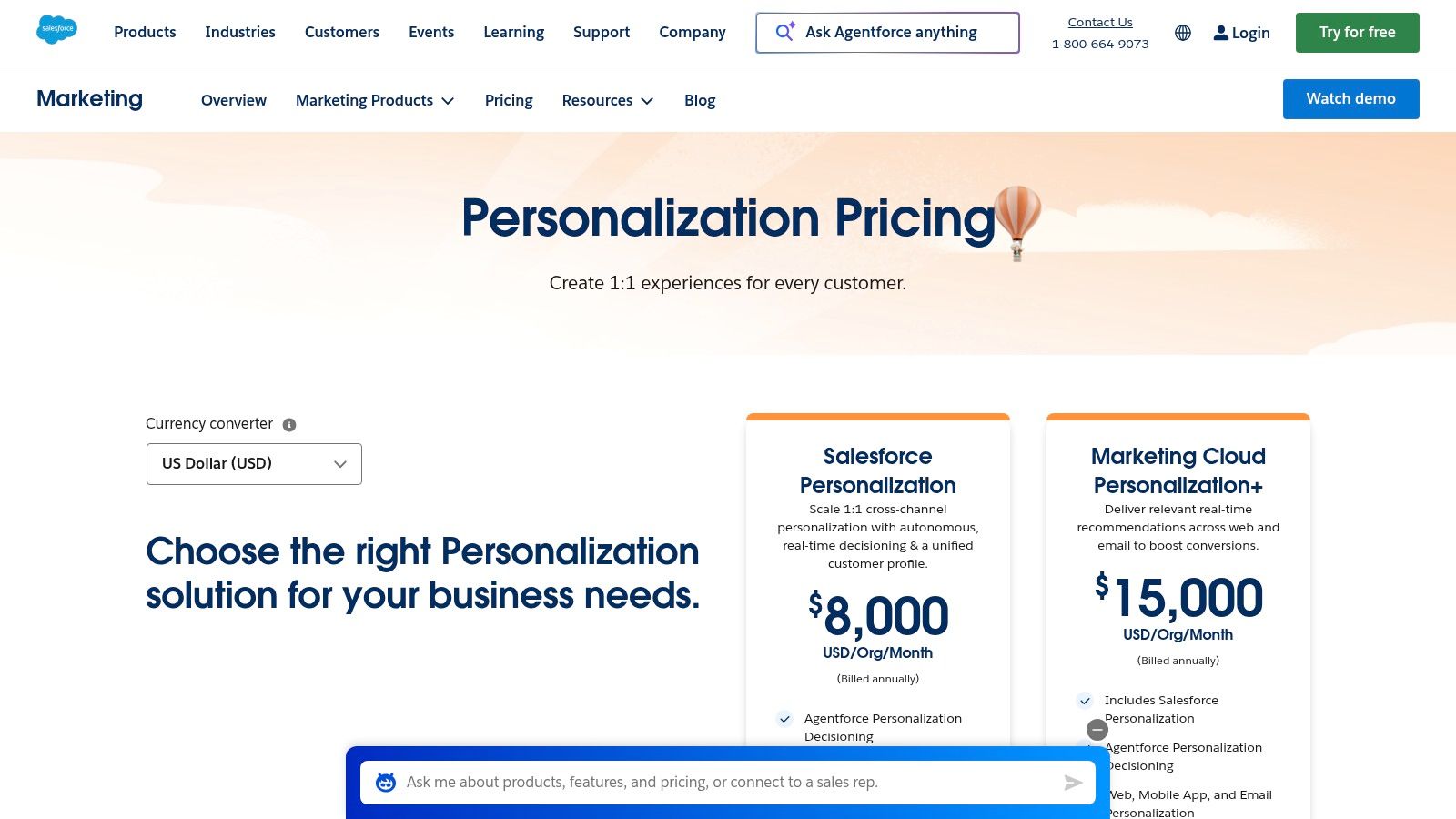
Salesforce Marketing Cloud Personalization is a powerful solution designed for real-time, cross-channel engagement. Its main strength lies in its deep integration with the Salesforce ecosystem, leveraging the Salesforce Data Cloud to create a unified view of the customer. This allows businesses to deliver consistent, personalized experiences across web, mobile apps, and email, all powered by AI-driven decisioning.
Key Features & Use Cases
This tool excels at connecting interactions across different touchpoints. For instance, a user who browses a specific product category on your website can later receive a personalized email with AI-powered recommendations for similar items. Its real-time capabilities mean you can immediately react to user behavior, like showing a personalized pop-up offer to a customer who is about to abandon their cart, unifying the web and email journey seamlessly.
Why it's on this list: For businesses already invested in the Salesforce ecosystem, this is one of the most cohesive website personalization tools available. Its native connection to Salesforce Data Cloud provides a single source of truth for delivering hyper-relevant, AI-driven experiences across all customer touchpoints.
Implementation & Pricing
- Implementation: Requires provisioning of Salesforce Data Cloud, making it a more involved setup best suited for teams already using Salesforce products.
- Pricing: Transparent list pricing is available for its key editions, starting with the Personalization edition.
| Pros | Cons |
|---|---|
| Native alignment with Salesforce ecosystem | Requires Salesforce Data Cloud provisioning |
| Transparent list pricing for key editions | Primarily designed for mid-market to enterprise users |
Learn More: https://www.salesforce.com/marketing/marketing-einstein-personalization-pricing/
5. VWO Personalize
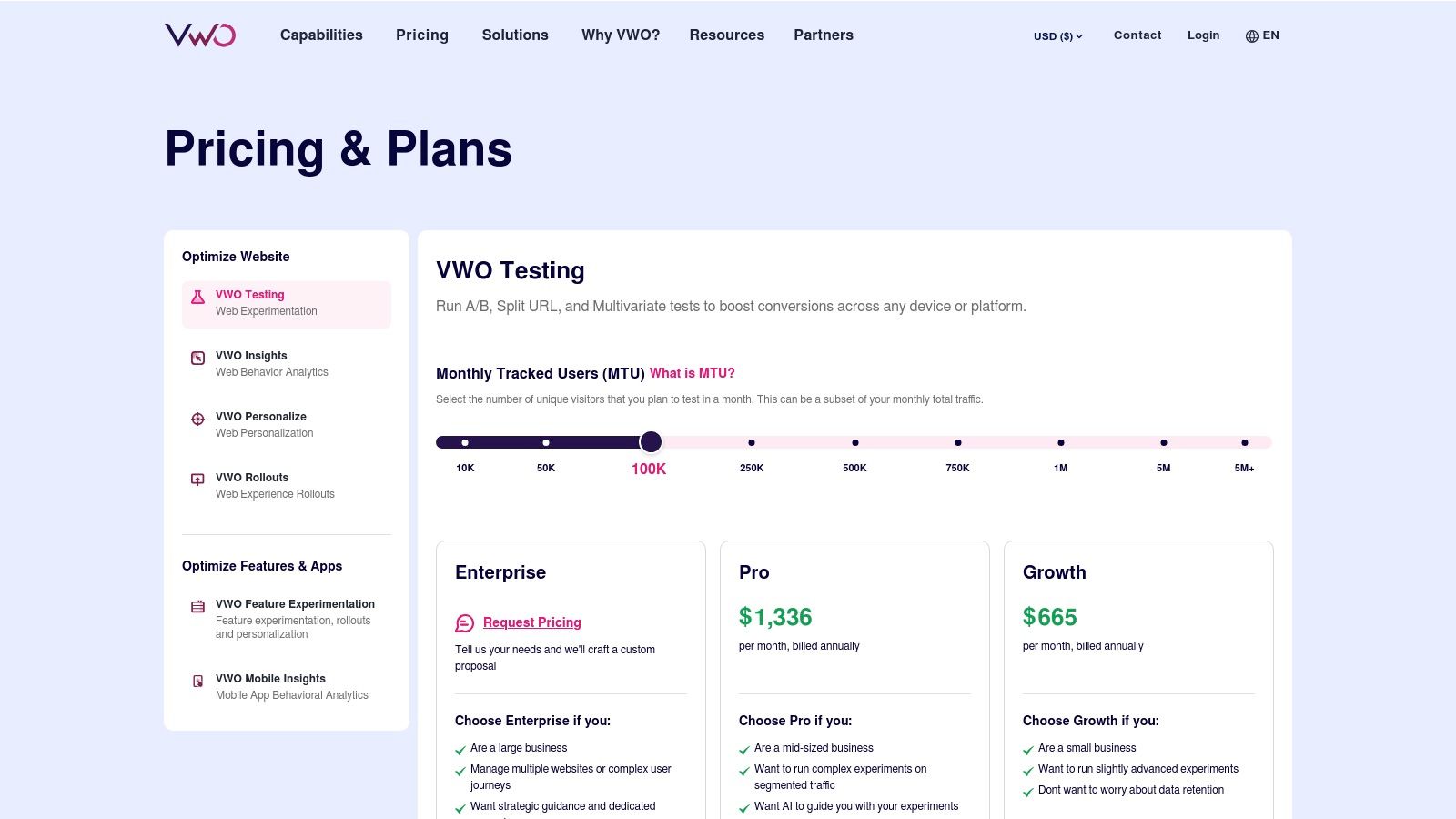
VWO Personalize is a powerful component of VWO's broader conversion rate optimization suite, making it a natural choice for teams already invested in A/B testing. It empowers users to build and deploy personalized experiences with both a user-friendly visual editor and a more advanced code editor, offering flexibility for different skill levels. Its unlimited campaign creation is a significant advantage, allowing for continuous experimentation without artificial limits.
Key Features & Use Cases
The platform is excellent for targeted messaging and promotions. For instance, a SaaS company could use the device and source targeting to display a special "Welcome" discount modal only to new visitors arriving from a specific LinkedIn ad campaign on a desktop. The AI-powered text suggestion feature can help refine messaging, similar to how one might optimize copy in automated direct messages, to maximize engagement for that specific audience segment.
Why it's on this list: VWO Personalize excels with its transparent pricing and a generous free Starter plan. This accessibility makes it one of the best website personalization tools for small to mid-sized businesses looking to adopt personalization without a prohibitive initial investment.
Implementation & Pricing
- Implementation: Requires adding a single, asynchronous VWO SmartCode snippet to your website's header.
- Pricing: Offers a free Starter plan for up to 5,000 Monthly Tracked Users (MTUs). Paid plans scale based on user volume and feature needs.
| Pros | Cons |
|---|---|
| Transparent plans with free Starter tier and trial | Advanced features and higher MTU limits require paid plans |
| Data center choices in US and EU for compliance | Some advanced segmentation may be less intuitive than competitors |
| Complements other CRO and A/B testing workflows | Can be complex if not using the full VWO suite |
Learn More: https://vwo.com/pricing
6. Monetate
Monetate is a dedicated personalization and A/B testing platform with deep roots in the e-commerce sector. Spun off from Kibo, it brings enterprise-level experience orchestration to retail and travel brands that need to deliver sophisticated, targeted campaigns at scale. Its primary strength lies in its ability to combine user data with real-time behavior to create highly relevant and revenue-driving customer journeys.
Key Features & Use Cases
The platform excels at dynamic content delivery and product recommendations. For instance, a retail website can deploy urgency messaging, like a "low stock" alert, that only appears for users who have viewed a specific product more than twice. It also enables more engaging interactions, such as personalized quizzes that guide shoppers to the right product category, enhancing both engagement and conversion rates through a more interactive experience.
Why it's on this list: Monetate’s specialization in e-commerce provides a focused feature set designed to boost retail KPIs. It is one of the most effective website personalization tools for large online stores looking for proven lift through advanced experience orchestration.
Implementation & Pricing
- Implementation: Typically involves a JavaScript tag and requires deeper integration with commerce platforms for full functionality.
- Pricing: Not publicly available. Monetate is geared towards enterprise clients and pricing is provided through custom quotes.
| Pros | Cons |
|---|---|
| Specialized expertise for e-commerce at scale | Enterprise-level pricing is not for small businesses |
| Strong integration with commerce and search platforms | Can be complex to implement without technical support |
Learn More: https://monetate.com/pricing/
7. Insider
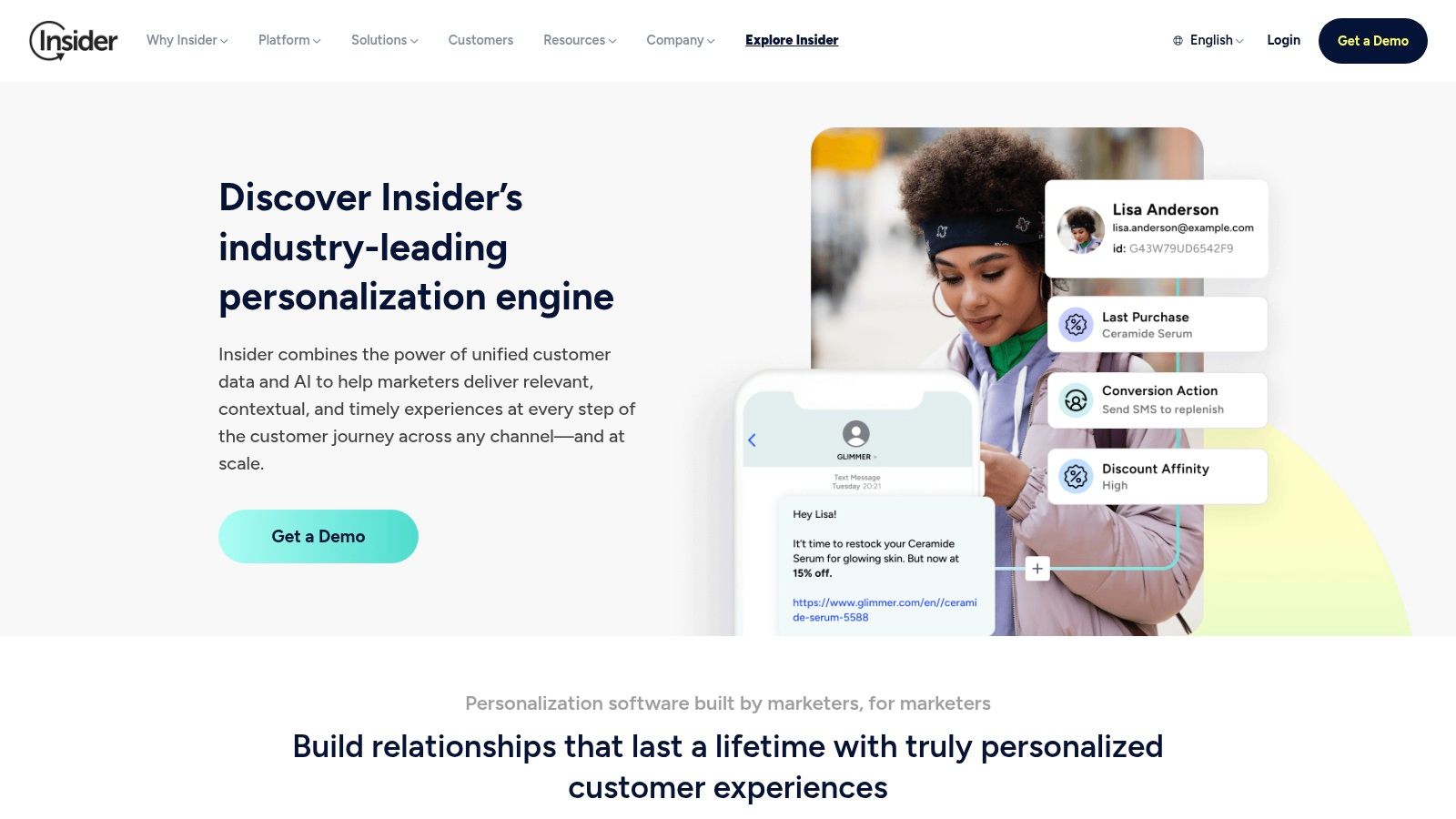
Insider is a powerful, AI-native omnichannel platform that goes beyond just website personalization. It centralizes customer data to deliver consistent, individualized experiences across web, mobile apps, email, and messaging channels. This unified approach allows brands to create cohesive customer journeys, making it a strong choice for businesses focused on building long-term loyalty.
Key Features & Use Cases
Insider excels at predictive segmentation, using AI to identify audiences likely to purchase or churn. An e-commerce brand, for example, could use its "Sirius AI" to auto-generate personalized product recommendations and display them in a web banner only to users predicted to have high lifetime value. The platform also offers an extensive library of over 140 templates for overlays, banners, and other elements, accelerating campaign creation.
Why it's on this list: Insider’s strength is its omnichannel-first approach. By connecting web personalization with app, email, and SMS, it provides one of the most comprehensive website personalization tools for creating a truly unified customer experience.
Implementation & Pricing
- Implementation: Integrates with your site via a JavaScript tag and leverages its built-in Customer Data Platform (CDP) to unify data.
- Pricing: Not publicly available. Pricing is custom-quoted and tailored to business needs, reflecting its enterprise-grade capabilities.
| Pros | Cons |
|---|---|
| Broad omnichannel coverage (web, app, email) | Pricing is not public and can be a significant investment |
| Strong AI-driven predictive segmentation features | May be too complex for businesses needing only simple web personalization |
Learn More: https://useinsider.com/individualize/
8. Intellimize
Intellimize is an AI-driven personalization and conversion optimization platform designed for marketers to quickly create and launch tailored website experiences. Acquired by Webflow, it specializes in dynamic landing pages and audience targeting without requiring deep technical skills. Its strength lies in using machine learning to automatically serve the best content variations to different visitor segments, continuously improving performance.
Key Features & Use Cases
The platform is excellent for B2B marketers looking to personalize content based on firmographics. For instance, you could use its visual editor to show a case study from the finance industry exclusively to visitors from banking companies. Its "Enhanced Match" feature helps identify anonymous traffic, allowing you to personalize experiences for a larger portion of your audience. The AI-powered copy suggestions also help teams rapidly iterate on messaging.
Why it's on this list: Intellimize excels at making AI-powered optimization accessible. Its no-code workflow and focus on B2B targeting make it one of the most practical website personalization tools for marketing teams who need to move fast and demonstrate results without constant developer support.
Implementation & Pricing
- Implementation: Deployed with a single, anti-flicker JavaScript snippet, ensuring a smooth user experience from the start.
- Pricing: Not publicly listed. Pricing is quote-based, typically aligning with mid-market to enterprise-level budgets.
| Pros | Cons |
|---|---|
| No-code visual editor is ideal for marketing teams | Pricing is not transparent and geared towards larger companies |
| Strong B2B firmographic and behavioral targeting | May have fewer deep integrations than enterprise-only platforms |
Learn More: https://www.intellimize.com/products/personalize
9. Mutiny
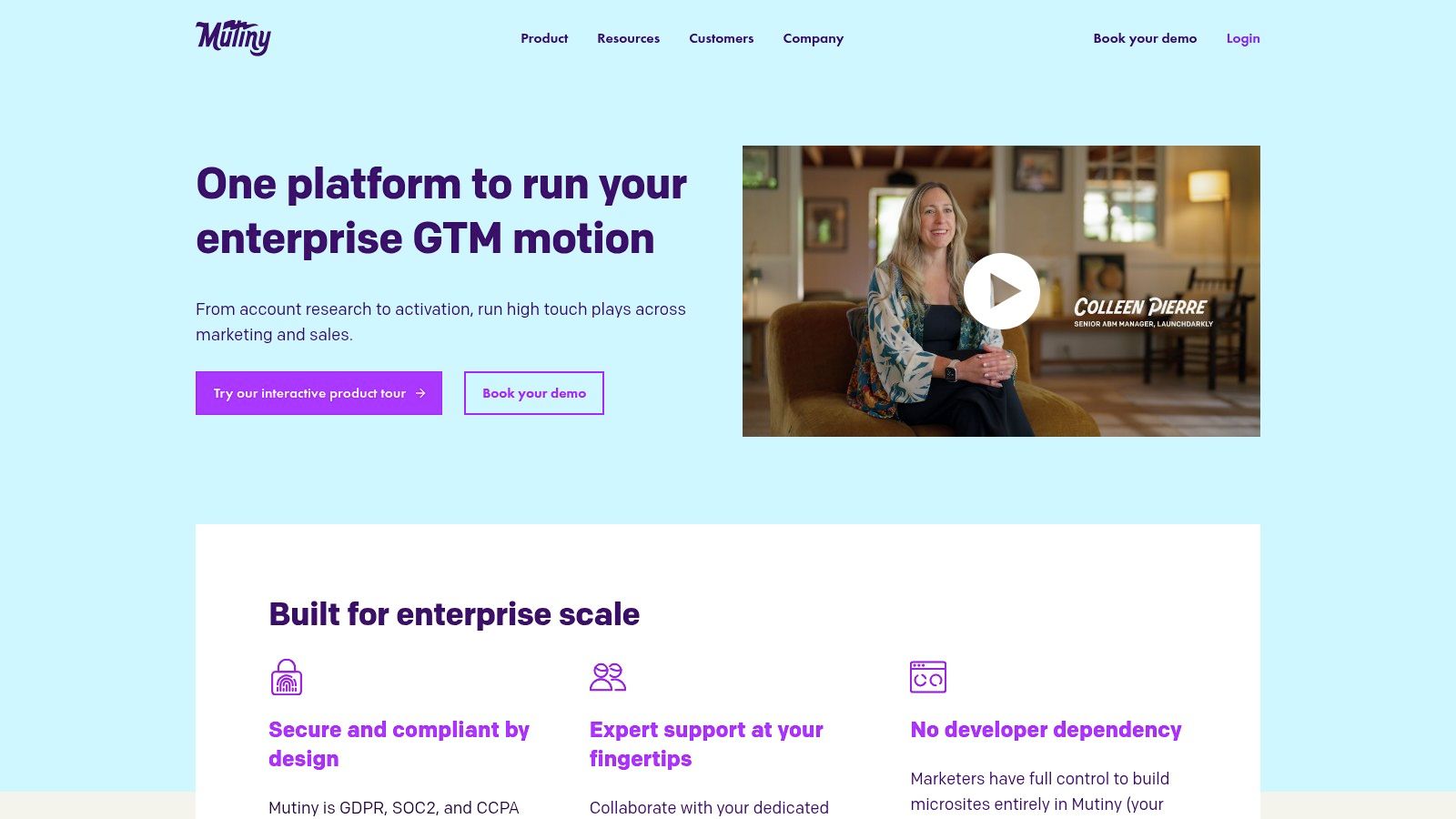
Mutiny is a B2B-focused personalization platform designed specifically for account-based marketing (ABM) strategies. It empowers marketing teams to convert their top-of-funnel traffic by dynamically tailoring website content for target accounts. The platform uses AI to help identify high-value visitors and suggest personalized headlines, logos, and testimonials, eliminating much of the manual work and guesswork.
Key Features & Use Cases
Mutiny is built for B2B marketers looking to engage specific companies. For instance, you can use its IP data and CRM integration to identify a visitor from a target account like "Acme Corp" and automatically replace your generic homepage headline with "The #1 Platform for Acme Corp." The no-dev microsite builder also allows teams to create personalized landing pages for outbound campaigns without needing engineering resources, streamlining the path from ad click to conversion.
Why it's on this list: Mutiny’s laser focus on B2B and ABM makes it one of the most effective website personalization tools for companies selling to other businesses. Its AI-powered recommendations and no-code editor democratize personalization for marketing teams.
Implementation & Pricing
- Implementation: Easily integrated with a JavaScript snippet and connects seamlessly with popular CRMs like Salesforce and HubSpot.
- Pricing: Pricing is not public and provided via a custom quote, targeting mid-market and enterprise B2B clients.
| Pros | Cons |
|---|---|
| Tailored around B2B sales funnels and ABM | Pricing model is not suited for small businesses |
| Rich content resources and playbooks | Strong focus on B2B might not fit B2C use cases |
Learn More: https://www.mutinyhq.com/product
10. Nosto
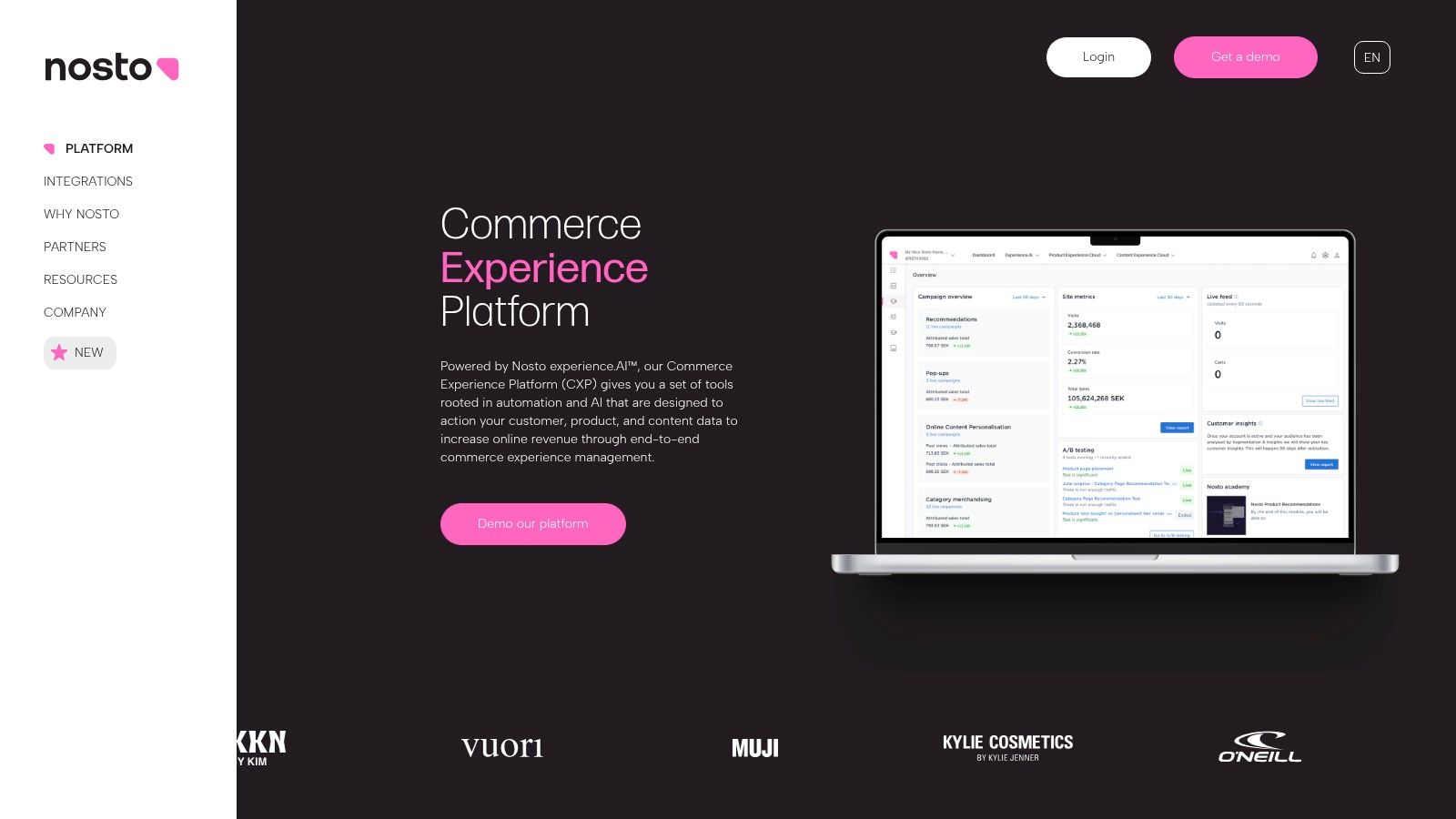
Nosto is a commerce experience platform designed specifically for online retailers. It moves beyond basic product recommendations to offer a full suite of personalization features, including AI-driven content, dynamic product bundles, and personalized search results. Its deep integration with ecommerce platforms like Shopify and BigCommerce makes it a powerful, cohesive solution for merchants looking to enhance every step of the customer journey.
Key Features & Use Cases
Nosto excels at creating a deeply integrated, personalized shopping experience. For example, a fashion retailer can use Nosto to automatically re-sort category pages based on a shopper's brand affinity, showing them products they're most likely to buy first. Its onsite content personalization allows you to display unique banners, pop-ups, or messaging based on segments like "high-value customers" or "cart abandoners," directly tying promotions to user behavior. The product recommendations are highly configurable, covering everything from cross-sells on product pages to post-purchase recommendations in emails.
Why it's on this list: Nosto's specialization in ecommerce is its greatest strength. It provides a comprehensive set of tools that work together seamlessly, making it one of the most effective website personalization tools for online stores focused on increasing average order value and customer lifetime value.
Implementation & Pricing
- Implementation: Integrates with major ecommerce platforms through dedicated apps and plugins, simplifying setup.
- Pricing: Quote-based and not publicly listed. Onsite content personalization is not available on all plans.
| Pros | Cons |
|---|---|
| Strong retail and ecommerce focus | Onsite content personalization availability depends on plan |
| Extensive, practical documentation and support | Pricing is quote-based and not publicly listed |
Learn More: https://www.nosto.com/solution/personalization/
11. Bloomreach
Bloomreach is an e-commerce powerhouse, combining product discovery with marketing automation. It specializes in making the entire customer journey, from search to purchase, a deeply personalized experience. The platform uses AI to understand user intent and merchandise products effectively, making it a go-to for retailers looking to boost conversions and average order value.
Key Features & Use Cases
Bloomreach shines with its AI-driven search and 1:1 product recommendation widgets. An online fashion retailer, for example, can deploy visual recommendations that suggest similar items based on what a shopper is currently viewing. Its no-code editor allows marketers to launch personalized banners or rearrange product grids for specific segments without developer help. Flicker-free testing ensures that these personalized experiences are seamless for the end-user.
Why it's on this list: Bloomreach excels by integrating high-powered product discovery with web personalization. Its focus on AI-driven merchandising makes it one of the most effective website personalization tools for large e-commerce businesses aiming to optimize every customer touchpoint.
Implementation & Pricing
- Implementation: Requires integration with your product catalog and customer data, often managed through APIs and a JavaScript snippet.
- Pricing: Custom quotes are provided. The platform is designed for mid-to-enterprise level e-commerce brands with significant traffic and revenue.
| Pros | Cons |
|---|---|
| Strong combination of discovery and personalization | Pricing is aimed at mid-to-enterprise customers |
| Extensive documentation for 1:1 recommendations | Can be complex to implement without technical resources |
Learn More: https://www.bloomreach.com/en/products/engagement/web-personalization
12. Shopify App Store – Personalization Apps Hub
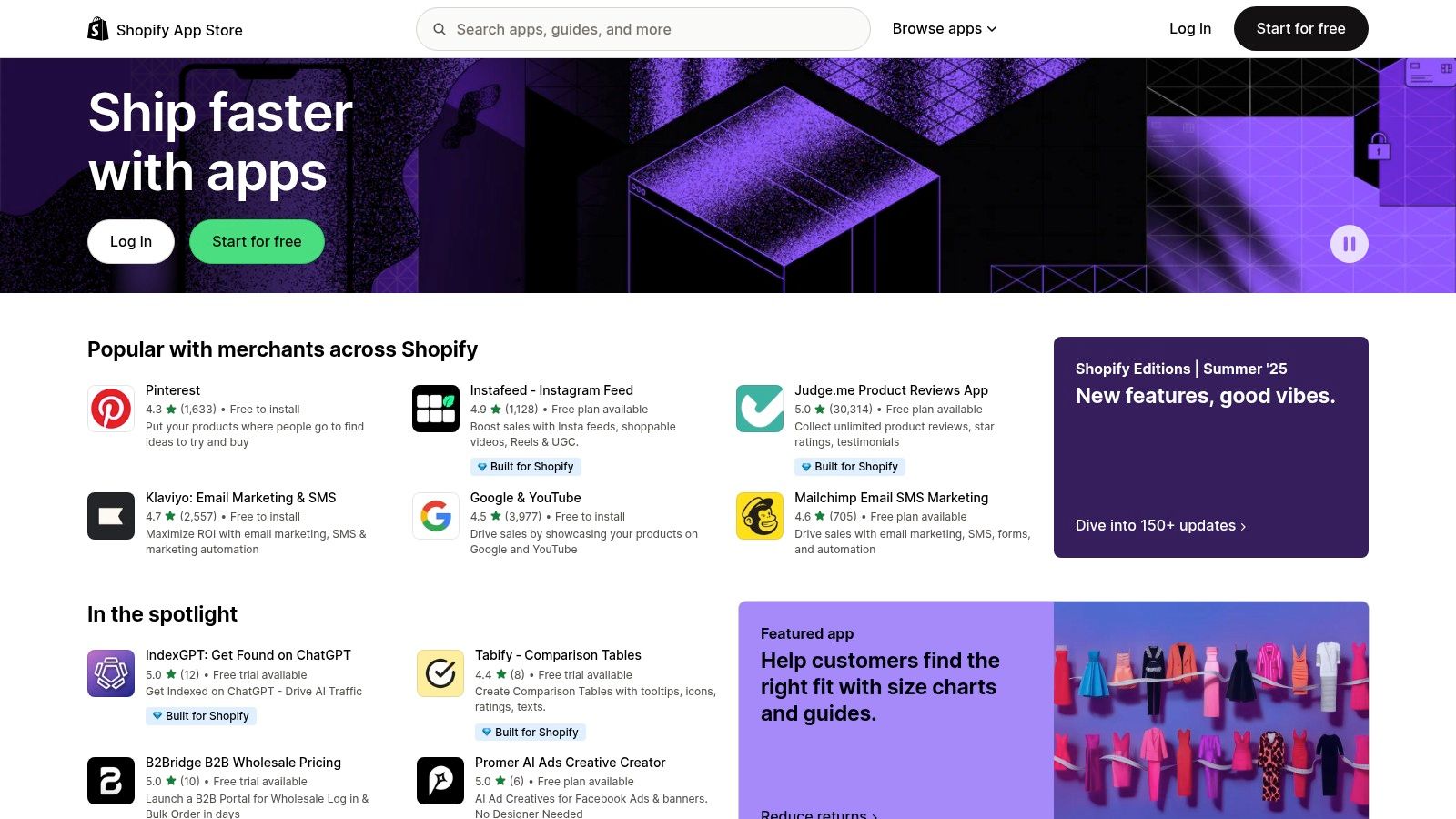
While not a single tool, the Shopify App Store is an essential hub for e-commerce merchants seeking accessible personalization solutions. It acts as a specialized marketplace where thousands of third-party developers offer plug-and-play apps for everything from dynamic product recommendations and personalized pop-ups to Account-Based Marketing (ABM) landing pages. This ecosystem is perfect for Shopify store owners who need effective tools without the complexity of enterprise platforms.
Key Features & Use Cases
The primary use case is enhancing the Shopify shopping experience with minimal technical effort. A merchant can easily install an app to show "Frequently Bought Together" bundles on product pages or display a unique discount code to visitors arriving from a specific social media campaign. Each app listing provides detailed reviews, screenshots, and clear pricing, allowing merchants to compare options and find the perfect fit for their budget and needs.
Why it's on this list: For Shopify users, the App Store is the most practical entry point into personalization. Its sheer variety and the transparency of user reviews make it one of the most valuable resources for finding vetted website personalization tools that integrate seamlessly.
Implementation & Pricing
- Implementation: Extremely simple one-click installation directly from the Shopify admin dashboard.
- Pricing: Varies widely from free plans to tiered monthly subscriptions, often with free trial periods available.
| Pros | Cons |
|---|---|
| Easy app installation and central Shopify billing | Quality and features vary widely between apps |
| Wide range of price points from free to premium | Category browsing and filtering can be inconsistent |
| Rich user reviews aid in vendor selection | Managing multiple apps can become complex |
Learn More: https://apps.shopify.com/
Top 12 Website Personalization Tools Comparison
| Product | Core Features | Target Audience | Unique Selling Points | Pricing Model | User Experience / Quality |
|---|---|---|---|---|---|
| Optimizely Personalization | Visual editor, A/B testing, real-time targeting | Enterprise teams | Tight personalization & experimentation | Enterprise contracts (not public) | Mature docs, steep learning curve |
| Dynamic Yield by Mastercard | Real-time segments, recommendations, integrations | Enterprise clients | Robust analytics & behavioral messaging | Quote-based, premium | Strong enterprise adoption |
| Adobe Target | AI-driven targeting, multi-page personalization | Enterprise users | Deep Adobe ecosystem integration | Enterprise contracts (not public) | Extensive features, complex setup |
| Salesforce Marketing Cloud Personalization | Cross-channel AI, Salesforce Data Cloud integration | Mid-market to enterprise | Native Salesforce ecosystem alignment | Transparent list pricing | AI decisioning, real-time profiles |
| VWO Personalize | Visual/code editors, unlimited campaigns, AI text | Small to enterprise | Free Starter plan, US/EU data centers | Tiered plans, free trial | Easy integration, CRO complement |
| Monetate | Onsite personalization, ecommerce integrations | Enterprise retail/travel | Specialized ecommerce expertise | Enterprise contracts (not public) | Proven lift, commerce focus |
| Insider | Omnichannel AI personalization, CDP integration | Mid-market to enterprise | Predictive segmentation, AI content tools | Pricing not public | Broad coverage, analyst recognized |
| Intellimize | AI landing pages, audience targeting, no-code | B2B/B2C marketing teams | Quick setup, enhanced anonymous targeting | Mid-enterprise contracts (not public) | No-code, marketing focused |
| Mutiny | AI account research, microsite builder, ABM | B2B mid-market/enterprise | ABM focus, CRM/automation integrations | Quote-based pricing | Tailored for B2B marketing |
| Nosto | AI-driven personalization, product/search focus | Retail ecommerce | Strong retail CX, segment-based tactics | Quote-based pricing | Practical docs, retail specialization |
| Bloomreach | AI search, visual recs, no-code editor | Mid-enterprise ecommerce | Combines discovery & personalization | Custom pricing | Flicker-free testing, strong docs |
| Shopify App Store – Personalization Apps Hub | Thousands of apps, product recs, dynamic content | Shopify merchants | Plug-and-play, wide price range | Free to premium apps | Ease of installation, varied quality |
Choosing the Right Personalization Tool for Your Goals
Navigating the landscape of website personalization tools can feel overwhelming, but the perfect solution for your business is within reach. We've explored a dozen powerful platforms, from enterprise-grade titans like Optimizely and Adobe Target to agile, B2B-focused engines like Mutiny and specialized e-commerce powerhouses like Nosto and Bloomreach. The key takeaway is clear: there is no single "best" tool, only the one that best aligns with your specific objectives.
Your choice ultimately hinges on a few critical factors: your business model, technical capabilities, and strategic goals. The best website personalization tools are not just software; they are strategic partners in crafting a better customer experience.
How to Make Your Final Decision
To narrow down your options, start by answering these fundamental questions:
- What is my primary goal? Are you trying to increase lead generation for a B2B service, boost average order value on an e-commerce site, or simply improve user engagement? A B2B company focused on account-based marketing will find more value in Mutiny, while a large online retailer will benefit from the deep commerce integrations of Monetate or Bloomreach.
- What is my team's technical skill level? Platforms like VWO offer a more user-friendly, visual editor that's great for teams just starting. In contrast, tools like Salesforce Marketing Cloud Personalization or Adobe Target may require more dedicated developer resources to unlock their full potential. Be honest about the implementation and maintenance resources you can commit.
- What is my budget? Your financial commitment will be a major deciding factor. While enterprise solutions offer incredible depth, smaller businesses or those testing the waters can find immense value in more accessible options or by starting with the diverse apps available in the Shopify App Store.
Implementation and Beyond
Remember, selecting a tool is only the first step. Successful implementation requires a clear strategy. Start small with a single, high-impact campaign, such as personalizing the homepage hero for returning visitors or tailoring call-to-action buttons based on user segments. Measure everything, learn from the data, and iterate.
The most effective personalization strategies combine different approaches. While many of the tools we've discussed excel at visual and content-based changes, don't overlook the power of conversational personalization. A visitor's journey doesn't end with what they see; it continues with the questions they ask. Integrating an intelligent support layer creates a truly seamless, 360-degree personalized experience. By anticipating needs through both content and conversation, you transform your website from a static brochure into a dynamic, helpful destination that builds lasting customer relationships.
Ready to add a powerful conversational layer to your personalization strategy? Yoonoo builds a custom AI chatbot from your website content in minutes, providing instant, personalized answers to your visitors' questions 24/7. Elevate your customer experience by combining visual personalization with intelligent, automated support at Yoonoo.