Live Chat Software Comparison The Definitive Guide

Picking the right live chat software really boils down to one key question: Are you looking for a simple, free tool for basic chats, or do you need a powerful, paid platform loaded with automation? The best choice for you will depend on your team’s size, your technical setup, and whether you're focused on support or proactive sales.
Why Live Chat Is No Longer Optional
In a world of instant everything, customers expect answers now, not tomorrow. The 24-hour email response window is a thing of the past. This shift has turned live chat from a "nice-to-have" feature into a must-have tool for any serious business.
When a potential buyer is on your pricing page with a question, live chat lets you step in at that make-or-break moment. That immediate connection can be the difference between closing a deal and losing a customer for good.
Fuel Growth and Work Smarter
Putting a good live chat system in place does more than just speed up conversations; it's a smart move for growth. The benefits are real and measurable.
- Boost Conversion Rates: Engaging visitors in real-time helps you guide them through a purchase and slash cart abandonment rates.
- Make Your Team More Efficient: One support agent can handle several chats at once, something that’s just not possible over the phone. This means you can manage more customer inquiries without a bigger team.
- Get Direct Customer Feedback: Live chat is an open line to your users, giving you raw, unfiltered insights into your products and their experience on your site.
This move toward instant communication is why the market is exploding. The global live chat software market hit a value of USD 1,147.7 million in 2024 and is expected to almost double by 2033. This boom is fueled by customer demand and the massive growth of e-commerce. You can dive deeper into these trends in this detailed report.
The magic of live chat is its immediacy. It meets customers right where they are, right when they need you, turning a moment of potential frustration into a great brand experience.
Meeting Today's Customer Expectations
From massive online retailers to small SaaS startups, companies are using this tech to get ahead. It’s all about meeting customers on their terms and offering support that feels effortless. To really drive the point home, consider the advantages of a live chat agent answering service, which shows how dedicated support can completely change the game.
By understanding the clear business case for live chat, you can invest confidently in a tool that will pay you back with happier customers and more revenue.
Choosing the Right Live Chat Software: A Practical Guide

Picking the right live chat software for your business goes way beyond just skimming a feature list. To really get it right, you need a solid framework for comparison. This means looking past the sales pitch to figure out how a tool will actually perform for your team and your customers.
First things first, nail down the core features. Can you automatically pop up a chat window for visitors who linger on your pricing page for more than 30 seconds? Does the platform have a shared inbox so your team can easily collaborate on tricky customer questions? These aren't just nice-to-haves; they're the building blocks of a great customer experience.
Look Beyond the Chat Box: Integrations and Automation
Let’s be real—no tool is an island. Your live chat software has to play nicely with the other systems you already use. If it doesn't, your team will be stuck manually copying and pasting information, which is a recipe for mistakes and wasted time.
Platforms that connect with no-code automation tools are a huge plus, letting you build powerful workflows without needing a developer on standby.
Think about the connections that matter most:
- Your CRM: Does it automatically log conversations in your customer profiles in something like HubSpot or Salesforce? Your team needs that full picture to have meaningful conversations.
- Your Help Desk: Can an agent turn a chat into a support ticket in Zendesk or Freshdesk with one click? This is crucial for making sure nothing gets lost.
- Your Analytics Tools: Can you push chat data into your analytics to see how conversations impact conversions and user behavior?
Intelligent chat routing is another game-changer. A good system should be smart enough to send a chat to the right department—sales, support, or billing—based on what page the visitor is on. It’s a simple feature that saves everyone time and gets customers to the right person, right away.
Don't Get Fooled by Pricing and a Pretty Interface
Pricing can be tricky. That low monthly fee might catch your eye, but hidden limits on contacts or features can sneak up on you as your business grows. When you’re comparing options, map out what your costs would look like based on your actual, projected usage.
A live chat tool is only as good as its user experience. If your agents find the dashboard confusing or slow, adoption will suffer, and customer satisfaction will drop.
You have to look at the experience from both sides of the screen. For your customers, the chat widget needs to be clean, mobile-friendly, and simple. For your agents, the dashboard has to be intuitive, giving them quick access to things like customer history, canned responses, and knowledge base articles. Many platforms now come loaded with AI features, too. You can learn more about how they work in our breakdown of https://yoonoo.ai/blog/ai-customer-service-tools.
At the end of the day, it's all about finding a tool that can grow with you. The software that’s perfect today needs to handle more chats, more agents, and more complex automation down the road. A little extra diligence now can save you from a massive headache later.
To help you organize your thoughts, here’s a quick checklist you can use when comparing different platforms.
Live Chat Software Evaluation Checklist
Use this table to quickly assess and compare live chat platforms based on the criteria that matter most for your business.
| Evaluation Criteria | What to Look For | Why It Matters |
|---|---|---|
| Core Chat Features | Proactive triggers, shared inbox, canned responses, file sharing. | These are the foundational tools your team needs to be efficient and effective. |
| Integrations | Native connections to your CRM, help desk, and analytics platforms. | A well-integrated tool eliminates manual data entry and provides a complete customer view. |
| Automation | Chatbots, intelligent routing, and workflow builders. | Automation saves time, routes customers correctly, and handles simple queries instantly. |
| Agent Experience (UX) | An intuitive, fast, and easy-to-navigate agent dashboard. | A poor UX leads to frustrated agents, slower response times, and low adoption. |
| Customer Experience (UX) | A clean, mobile-responsive, and customizable chat widget. | The customer-facing interface should be seamless and reflect your brand. |
| Reporting & Analytics | Dashboards for chat volume, response times, and CSAT scores. | Data helps you measure performance, identify bottlenecks, and improve service. |
| Pricing Model | Clear, scalable pricing without hidden fees for contacts or features. | The cost should align with your budget and scale predictably as your business grows. |
| Scalability | Ability to handle increased chat volume and add more agents easily. | The platform must support your business's future growth without needing a replacement. |
This checklist isn't exhaustive, but it covers the big-ticket items you absolutely need to consider. By thinking through each of these points, you'll be in a much better position to choose a live chat solution that truly works for you.
A Detailed Comparison of Top Live Chat Platforms
Picking the right live chat software can feel overwhelming. It’s like being in a crowded market where every vendor is shouting about their features. To cut through the noise, we need to really dig in and compare the top contenders—Yoonoo, Tawk.to, Zendesk Chat, Tidio, and LiveChat—based on how they actually work in the real world. This live chat software comparison is all about what truly sets each one apart.
The competition is fierce, which is great for businesses because it means there's a huge variety of options. Market data shows Tawk.to holding a strong lead with 21.8% of the market, followed by heavyweights like Zendesk Chat at 8.5%, Tidio at 7.7%, and LiveChat at 6.02%. More importantly, the results speak for themselves: customers who use live chat often spend up to 60% more per purchase, and companies see conversion rates jump by an average of 3.84%. You can see more compelling numbers in this comprehensive analysis from Tidio.
Yoonoo: The AI-First Innovator
Yoonoo isn't just another live chat tool with a chatbot tacked on; it's built from the ground up with artificial intelligence at its core. Its biggest strength is its incredible ability to learn from your website's content, effectively turning your existing knowledge base into a smart, 24/7 support agent.
This approach is perfect for businesses that want to deliver instant, accurate answers without needing a huge support team. Imagine a potential customer lands on your site late at night with a very specific question. Instead of hitting a "We're offline" notice, they get a precise answer pulled directly from your help documentation.
Yoonoo's Standout Feature: The "learn from content" capability is a genuine game-changer, especially for smaller teams. You can spin up a smart, context-aware chatbot in minutes just by feeding it a URL. It dramatically lowers the barrier to entry for effective AI support.
For instance, a software company can point Yoonoo to its technical docs to handle user questions, while an online store can have it scan its FAQ page to answer queries about shipping policies. This focus on content-driven AI makes it one of the best customer service chatbots available for businesses that want to empower customers with self-service.
Tawk.to: The Undisputed Free Champion
Tawk.to has attracted a massive following with a simple, powerful promise: a fully-featured live chat solution that is 100% free, forever. This isn't some stripped-down trial or a freemium plan full of gotchas. For startups, freelancers, and nonprofits on a tight budget, that offer is almost impossible to ignore.
Of course, there’s a trade-off. While it nails the essentials like live chat, ticketing, and a knowledge base, it doesn't have the sophisticated automation or deep analytics you'll find in its paid competitors. The company makes its money by offering optional agent-for-hire services, where their team handles your chats for an hourly rate.
- Best For: Businesses on a strict budget who need a solid, no-frills live chat tool without any financial commitment.
- Key Limitation: Its AI and chatbot features are very basic. It’s designed first and foremost as a tool for human agents.
If your only goal is to give customers a way to talk to a real person on your site, Tawk.to is a fantastic place to start.
Zendesk Chat: The Integrated Support Powerhouse
Zendesk Chat isn't just a standalone tool; it's a critical piece of the massive Zendesk ecosystem. Its real power comes from its seamless integration with Zendesk's best-in-class help desk, CRM, and knowledge base. If your business already runs on Zendesk for support tickets, adding Chat is a no-brainer.
This tight integration means an agent can turn a chat into a support ticket with one click, view a customer's entire support history mid-conversation, and pull answers from the knowledge base without ever leaving the chat window. It creates a unified, efficient workflow that standalone products just can't match.
Its pricing reflects this enterprise-level focus. To really unlock its potential, you often need a subscription to the full Zendesk Suite, making it a less ideal choice for businesses just looking for a simple chat widget.
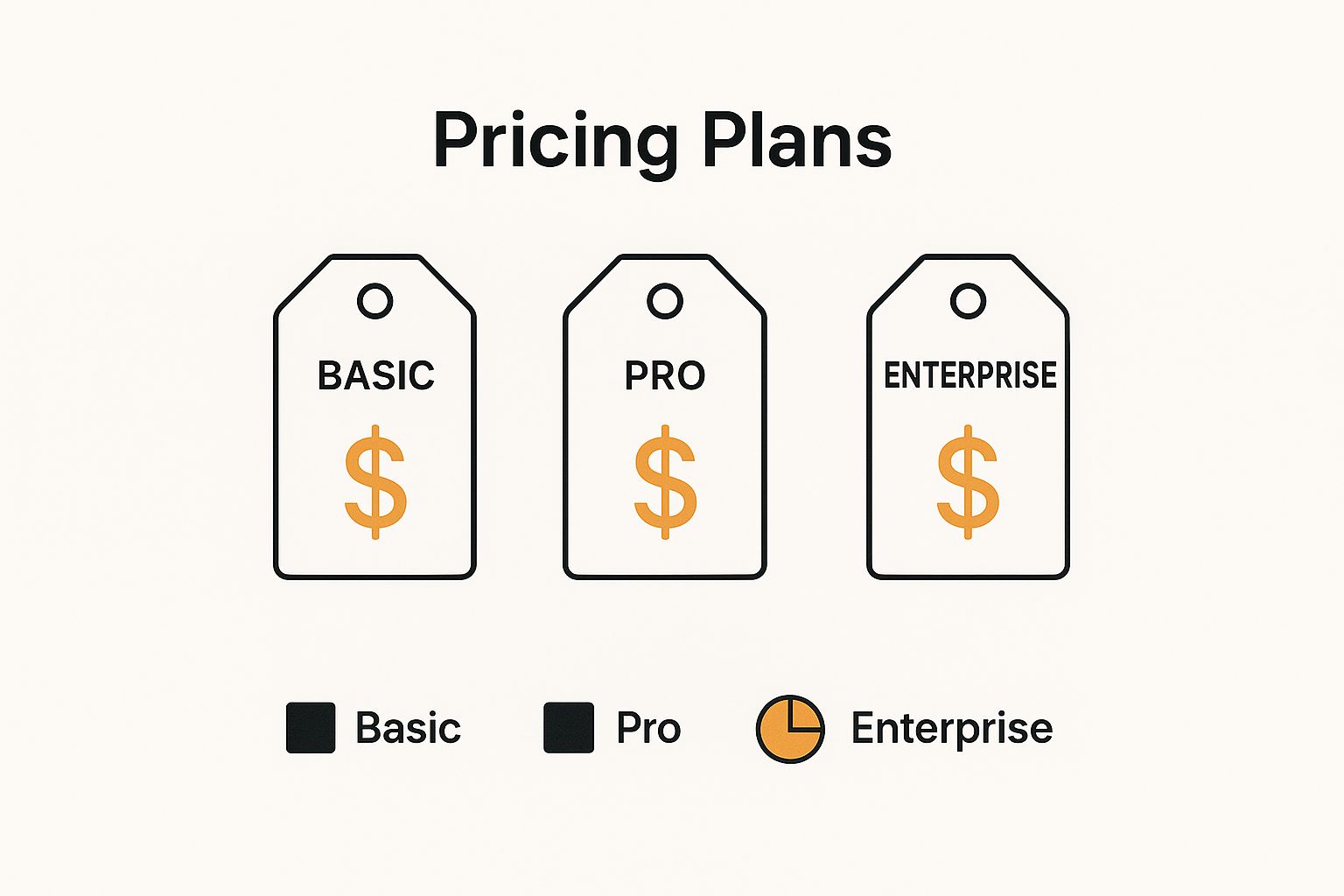
This image shows a common tiered pricing model, designed to scale with a company as it grows from basic needs to enterprise-level demands.
Tidio: The All-in-One for Small Business Growth
Tidio has carved out a space for itself as the swiss-army knife for small and medium-sized businesses. It bundles live chat, chatbots, and email marketing into one surprisingly affordable and easy-to-use platform. This all-in-one approach is a dream for teams that don't want to manage—and pay for—multiple different tools.
One of Tidio's coolest features is its visual chatbot builder. Using a simple drag-and-drop interface, anyone on your team can build automated conversation flows without knowing any code. You can create bots to qualify leads, answer common questions, or even offer discounts to visitors who look like they're about to leave your site.
- Best For: E-commerce shops and small marketing teams who want an easy way to use chatbots for lead generation and sales.
- Key Differentiator: The powerful combination of live chat, chatbots, and marketing automation in a single, budget-friendly package.
Tidio even offers a generous free plan, which includes basic live chat and a few chatbot triggers, so you can easily try it out before committing.
LiveChat: The E-commerce and Sales Specialist
LiveChat has been a major player for years, and it shows. The platform is finely tuned to serve sales-focused teams, especially in the e-commerce world. It's packed with features designed to proactively engage website visitors and convert them into paying customers.
Tools like targeted chat invites, detailed visitor tracking (you can see what’s in a customer's cart in real-time), and powerful sales reports make it a revenue-generating machine. Agents can see a shopper's browsing history and cart contents, allowing them to jump in with hyper-relevant help or product suggestions.
LiveChat's real magic lies in its focus on proactive engagement. It gives sales teams the tools they need to start conversations with high-value prospects at the perfect moment, which directly impacts the bottom line.
LiveChat also has a marketplace with over 200 integrations, connecting seamlessly with top e-commerce platforms like Shopify, BigCommerce, and Magento. While it's one of the more premium-priced options, the return on investment is clear for any business where every chat is a potential sale.
Choosing the Right Software for Your Business Model
Breaking down features is one thing, but the "best" live chat software really comes down to what fits your business like a glove. The perfect tool for a bustling e-commerce store is often total overkill for a small B2B consulting firm. So before you get lost in the details, the first step is always to look at your own day-to-day needs.
This is where we translate those side-by-side comparisons into a practical decision you can feel good about. We'll connect specific business scenarios to the platforms built to handle them, helping you pick a tool that actually solves your problems instead of creating new ones.
Best for Budget-Conscious Startups
When you're a startup, every single dollar counts. The main goal is simple: open a direct line to your first customers without breaking the bank. You just need solid, reliable chat that works.
In this corner, Tawk.to is the hands-down winner. It’s completely free—and they actually mean it. You get unlimited agents and a full chat history, which is an insane value. It nails the basics, letting a new company offer professional, real-time support from day one without spending a dime.
For a startup, proving your concept and building relationships is everything. A free, dependable tool like Tawk.to removes the financial roadblock, letting you focus on what really matters: your customers.
Sure, it doesn't have the fancy automation you'll find in paid tools, but for a team just starting out and handling chats manually, it's flawless.
Best for High-Volume E-commerce Sales
E-commerce shops sink or swim based on their ability to turn browsers into buyers. The right chat tool isn't just for customer support; it's a proactive sales machine designed to engage shoppers, rescue abandoned carts, and bump up the average order value.
This is exactly what LiveChat was built for. Its features are laser-focused on sales. For instance, real-time visitor tracking lets your agents see what’s in a customer’s cart as they chat. This context is pure gold, allowing them to jump in with a relevant offer—like a free shipping code—right when someone seems to be hesitating at checkout. Plus, its tight integrations with platforms like Shopify and BigCommerce make it feel like a natural part of your sales process.
Best for Integrated Enterprise Support
For large companies or businesses already committed to a big help desk platform, the last thing you want is another silo. The top priority is a live chat tool that plugs right into your existing system, creating a single, unified customer view across every channel.
This is where Zendesk Chat is the obvious choice—if you’re already in the Zendesk ecosystem. Because it’s a native part of the Zendesk Support Suite, conversations move seamlessly from chat to ticket to resolution. Agents can see the full history of every interaction, which is absolutely critical for providing smart, consistent support at enterprise scale.
Best for Data-Driven Marketing Teams
To a marketing or growth team, live chat is a treasure trove of customer insights and a killer tool for qualifying leads. They need a platform that’s heavy on AI, automation, and analytics to truly understand what makes users tick and how to optimize every step of the conversion funnel.
This is where Yoonoo really shines. Its AI-first design allows it to learn directly from your website content to provide instant, accurate answers 24/7. This immediately frees up your human agents to handle the high-value conversations that close deals. Yoonoo’s analytics give marketing teams the hard data they need to see what customers are asking, spot gaps in their content, and tweak their messaging for better results. This focus on smart automation and actionable data makes it the go-to for teams looking to scale their engagement efforts.
The demand for these specialized tools is growing. Some analysts predict the live chat software market will hit USD 33.54 billion by 2034, largely because of its deep integration into e-commerce, healthcare, and finance. You can dive into the complete live chat software market research for a closer look at these trends.
Getting Live Chat Up and Running the Right Way
Picking the right live chat tool is just the start. The real magic happens when you weave it into your daily workflow, and a successful launch is more about smart planning than just flipping a switch.
First up is the technical side. Most modern platforms make this part a breeze, usually involving just a few lines of code to get the chat widget on your site. Once it’s there, spend some time customizing the look and feel—tweak the colors, upload your logo, and write a welcome message that sounds like you. This makes the chat feel like a core part of your website, not some clunky add-on.
Prepping Your Team for Prime Time
With the widget live, it's time to focus on your people. You can't just hand them a login and hope for the best. They need a solid game plan and the right tools to really shine.
Start by setting up agent profiles and figuring out your chat routing rules. Think about it: should a question from the pricing page go straight to sales? Should a query from the help center land with the support team? Nailing down these rules from the get-go means customers get to the right person, right away.
Next, build out a library of saved replies (sometimes called canned responses). These are your pre-made answers to the usual suspects, like "What are your hours?" or "Can you tell me about your return policy?" This one simple move can slash response times by over 30% and keeps your brand voice consistent.
A great live chat setup isn’t a one-and-done project. It’s an ongoing loop of measuring what works, figuring out why, and making small adjustments over time. Every chat is a little goldmine of customer feedback.
To see how you're doing, you need to track a few key performance indicators (KPIs) right from the start. These numbers will tell you where you’re winning and where you can improve.
- First Response Time: How fast are you getting back to people? You should be aiming for under a minute.
- Average Handle Time: What’s the typical length of a chat conversation?
- Customer Satisfaction (CSAT) Score: A quick post-chat survey is the best way to get a pulse on how customers feel about the experience.
Moving Beyond Basic Support
Once your team has the hang of answering incoming chats, you can start getting more strategic with proactive engagement. This is all about setting up automated messages that pop up at just the right moment. For example, you could trigger a message for someone who has been lingering on a product page for a couple of minutes.
The goal here is to be helpful, not annoying. A well-timed message like, "Hey, looks like you're comparing a few of our plans. Have any questions I can help with?" can be the little push a customer needs to move forward.
Finally, get into the habit of regularly reviewing your chat transcripts. These conversations are raw, unfiltered feedback straight from your audience. You'll spot common pain points, find confusing parts of your website, and even stumble upon ideas for new features. This is how live chat goes from being just another support channel to a powerful engine for business growth.
Frequently Asked Questions About Live Chat Software
Diving into the world of live chat can bring up a lot of questions. Even after a detailed live chat software comparison, you might still be wondering what makes the most sense for your business. Let's tackle some of the most common questions to help you nail down your decision and get your team ready for what's next.
A lot of people start by thinking about the price tag. Is it really possible to get going without a big upfront investment, especially if you're a smaller company?
Can I Use Live Chat Software for Free?
Absolutely. Several platforms offer fantastic free plans, which is a huge help for startups or small teams just getting their feet wet. Tawk.to is famous for its powerful free-for-life model, though you won't find the sophisticated automation that paid competitors offer. Others, like Tidio, have "freemium" plans with core features for a few agents, making them perfect for a trial run.
But keep in mind, as your business grows, you’ll probably hit a wall and need to upgrade. Paid plans are where you'll find the game-changing features like deep analytics, advanced chatbot builders, and all the key CRM integrations. It’s always a good idea to look at a free plan's limits and weigh them against where you see your business heading.
How Does Live Chat Integrate with Other Business Tools?
Modern live chat tools are built to be team players. They're designed to plug right into the rest of your tech stack, becoming a central point for all your customer conversations. The most powerful integrations are the ones that link up with your CRM, like Salesforce or HubSpot. This sync gives your entire team a 360-degree view of every customer's history.
They also connect with help desk software like Zendesk to turn tricky chats into support tickets, or with e-commerce platforms like Shopify so your agents can pull up order details on the fly. These connections are usually handled through a built-in app marketplace or a tool like Zapier. Before you commit to a provider, double-check that it plays nicely with the tools your team uses every single day.
The real power of live chat is unlocked when it talks to your other systems. A well-integrated tool breaks down data silos, creating a single source of truth for every customer conversation.
What Is the Difference Between Live Chat and a Chatbot?
This is a really important one. Live chat is a conversation between a real person on your team and a customer, happening in real-time. It’s perfect for sorting out complex issues, building genuine customer rapport, and closing a sale that needs a human touch.
A chatbot, on the other hand, is software that uses AI to automate those conversations. It’s your best bet for answering frequently asked questions, qualifying new leads, directing people to the right department, and providing 24/7 support when your team is off the clock.
The smartest strategies actually blend the two. A chatbot can handle the first point of contact and resolve simple problems instantly. If things get complicated or a customer needs a more empathetic ear, the bot can seamlessly hand off the conversation to a human agent. This hybrid approach gives you the best of both worlds: incredible efficiency without sacrificing great customer experience.
Ready to see how AI can transform your customer support? With Yoonoo, you can set up a smart, content-aware chatbot in just five minutes—no code required. Give your customers the instant answers they crave and free up your team for high-value conversations. Start for free on yoonoo.ai.