How to Increase Customer Engagement That Lasts

If you want to boost customer engagement quickly, you need to change your mindset. Stop thinking about one-off sales and start focusing on building real, lasting relationships. It’s about using technology not just to be more efficient, but to create personal, human-centric experiences that make people feel seen and understood.
Building Real Connections in a Digital World

Let's be honest, a lot of what passes for "customer engagement" these days feels pretty robotic. Generic email blasts and loyalty programs that just offer the same old discounts don't cut it anymore. People expect more from the brands they do business with.
Real engagement isn't a marketing trick; it’s the outcome of an authentic connection. This guide is all about getting past the generic advice and focusing on what actually moves the needle. It’s less about huge, expensive campaigns and more about the small, consistent, and thoughtful interactions that happen every day. When you can anticipate a customer's needs, you're building a relationship, not just processing a transaction.
This is what turns a one-time buyer into a loyal fan who tells everyone about you.
The Foundation of Modern Engagement
A great engagement strategy is built on a few core ideas. It's about designing a system where every touchpoint, no matter how small, makes the customer feel more connected to your brand. Of course, a huge piece of this puzzle is knowing how to retain customers and build real loyalty in the first place.
Here’s a quick look at the core strategies that form the foundation of a modern and effective customer engagement plan.
Modern Pillars of Customer Engagement
| Strategy Pillar | Primary Goal | Key Tactic Example |
|---|---|---|
| Personalization at Scale | Make every customer feel like an individual. | Using purchase history to recommend new products via email. |
| Proactive Communication | Solve problems before they even happen. | Sending an SMS alert about a shipping delay with a new ETA. |
| Valuable Content | Become a trusted resource, not just a seller. | Publishing a detailed guide on how to use your product effectively. |
| Rewarding Loyalty | Acknowledge and appreciate repeat business. | Offering early access to new releases for long-time customers. |
These pillars work together to make your brand a go-to part of your customer's life, not just another company vying for their attention.
We’re going to dive deep into a few key areas:
- Using AI for Personalization: Think beyond just using a customer's first name. We're talking about experiences that feel like they were made just for them.
- Designing Valuable Rewards: Creating loyalty programs that offer real value, like exclusive access or unique experiences, not just another 5% off coupon.
- Creating a Seamless Journey: Making sure the experience is smooth and positive, whether they're on your website, scrolling through social media, or chatting with your support team.
A brand is no longer what we tell the consumer it is—it is what consumers tell each other it is. Effective engagement empowers your customers to become your best storytellers.
By focusing on these practical strategies, you can build the kind of genuine loyalty that leads to real, sustainable growth.
Using AI to Create Hyper-Personalized Experiences

Let's be honest, the days of one-size-fits-all marketing are over. Your customers have come to expect that you understand their specific needs and what they're looking for. This is where Artificial Intelligence (AI) stops being just a buzzword and becomes a genuinely powerful tool for building real connections.
AI is what lets you deliver true personalization at a scale you could never manage manually. It goes way beyond just slotting a customer’s first name into an email. Instead, AI digs through huge amounts of data—past purchases, browsing habits, support tickets—to figure out what someone might want or need next. This lets you craft experiences that feel like they were made just for them.
This move toward smarter personalization is quickly becoming the new normal. In fact, according to Gartner’s Peer Insights, a staggering 98% of organizations have already put AI solutions into their customer engagement setup or are in the process of doing so.
Moving Beyond Basic Personalization
Good AI isn't just about showing someone products they've already looked at. The real magic happens when you use it to create proactive, genuinely helpful interactions that build trust and make customers feel seen.
Imagine an e-commerce store. Instead of just recommending similar items, AI can spot a customer who seems to be hesitating or comparing several different products. It could then trigger a chat window to pop up, offering a side-by-side comparison chart or a link to a helpful guide. It’s about stepping in to help them make a confident choice.
When you start anticipating needs instead of just reacting to them, the entire customer journey shifts. It’s no longer a simple transaction; it becomes a supportive conversation. That proactive touch is a total game-changer for engagement.
Putting AI to Work in the Real World
You don’t need a huge team of data scientists to get started. Plenty of modern tools make this kind of sophisticated personalization accessible for just about any business. If you're curious about what's out there, this guide on the best website personalization tools is a great place to start.
Here are a few practical ways you can use AI to make your customer interactions better right now:
- Dynamic Website Content: AI can change what people see on your site based on who they are. A new visitor might get a welcome discount, while a loyal customer sees new arrivals from their favorite brand.
- Predictive Support: AI can analyze behavior to flag customers who might be at risk of leaving. This gives your support team a heads-up to reach out with a thoughtful check-in or a special offer, stopping a problem before it even starts.
- Smarter Email Marketing: Forget sending everyone the same email at the same time. AI can figure out the perfect moment to send a message to each person, filled with product recommendations they’ll actually be interested in.
When you bring these intelligent systems into your process, you create a much smoother and more intuitive experience for your customers. This kind of personal attention shows them you're listening, which is the key to building the kind of lasting relationships that drive real engagement.
Designing Reward Programs People Actually Value
If your loyalty program is just a digital punch card for discounts, you're missing the point. Customers today crave more than a simple transaction; they want to feel like they're part of something special, a community built around your brand. The real magic happens when your rewards create an emotional connection, not just a financial one.
This is exactly where so many businesses go wrong. They set up a system that’s easy to track but does nothing to spark real excitement. Customer loyalty is becoming all about the experience, and the numbers back it up. The global loyalty management market was valued at $13.31 billion and is projected to soar past $41.21 billion by 2032. You can dig into more customer loyalty statistics and see for yourself how experience is becoming just as crucial as the product.
Moving Beyond Monetary Perks
You can't buy genuine loyalty with a 10% off coupon. You earn it through recognition and exclusivity. It's time to ask yourself: how can we make our most dedicated customers feel truly special? This is where non-monetary rewards shine, often proving far more valuable than a simple price cut.
A great way to start is with a tiered system that gives customers a clear path to new levels of status. This kind of structure gives people something to aim for and publicly celebrates their commitment to your brand.
Here are a few ideas for rewards that do more than just save people money:
- Exclusive Access: Let your best customers be the first to know about new product drops or get early entry to sales events. It makes them feel like insiders.
- Community Status: Give top-tier members a special badge or title in your online community. A little recognition goes a long way.
- Personalized Gifts: Dig into their purchase history and send a surprise gift that you know they'll love. It shows you're paying attention.
The best loyalty programs don't just reward transactions; they celebrate relationships. They make people feel like they’ve joined an exclusive club worth being a part of.
The Power of Surprise and Delight
Predictable rewards are fine, but it’s the unexpected ones that people remember and talk about. Adding an element of surprise can turn a boring, everyday interaction into a memorable moment. This is the whole idea behind a "surprise-and-delight" strategy—it’s all about doing something extra when they least expect it.
Think about a local coffee shop randomly upgrading a regular's order for free. Or an e-commerce store slipping a small, thoughtful gift into a repeat customer's package. These unprompted gestures are incredibly effective because they feel genuine and personal, not like just another marketing tactic.
Ultimately, building a great rewards program comes down to understanding what makes your customers tick. Use your data to do more than just track points; use it to learn what truly motivates and excites them. By blending tiered benefits, exclusive access, and those unforgettable surprise moments, you can turn casual shoppers into your brand’s biggest fans.
Crafting a Seamless Omnichannel Customer Journey
Let's be honest, your customer's experience doesn't happen in a neat little box. They might see an ad on Instagram, browse your website on their laptop, ask a question on live chat from their phone, and then pop into your physical store to buy. Each of these moments is a touchpoint, and how they all connect—or don't—defines their entire journey with you.
Real, lasting engagement is born from making that journey feel completely effortless. Nothing kills trust faster than a clunky, disjointed experience where a customer has to repeat their story to three different people. When you nail the handoffs between channels, you're not just being efficient; you're showing customers you value their time and attention.
Unifying the Customer View
The very first move is to tear down the walls between your teams. Your social media manager, support reps, and in-store staff need to be looking at the same customer story. If someone complains on Twitter and then calls your support line an hour later, that agent should see the tweet and be ready to help, not start from scratch.
This single source of truth is the backbone of a real omnichannel strategy. It's about giving your teams the context they need to provide smart, consistent support everywhere. For a deeper look at getting this right, our guide on what is omnichannel customer service walks you through the details.
Think about a retailer that lets you return an online purchase in-store. The clerk scans your receipt, sees your order history, processes the return instantly, and maybe even suggests a different size or a new product you might like. That’s how you turn a return—a potentially negative moment—into a genuinely helpful interaction that builds loyalty.
Mapping and Optimizing Touchpoints
Once your data is flowing freely, it's time to put on your customer hat and walk through every possible path they might take. You have to experience it for yourself.
- Discovery: How do people find you? Is the message on your Facebook ad the same as on your homepage?
- Consideration: When they're digging into your products, can they find reviews or compare features without hitting a dead end?
- Purchase: Try checking out on your phone. Is it a nightmare? Are you asking for information you don't really need?
- Post-Purchase: What happens after they buy? Do they just get a generic receipt, or do you send helpful tips on how to use their new product?
Mapping this out reveals all the little friction points you can smooth over. If you want to go deeper into building these relationships, check out this modern guide to customer engagement in retail.
The goal is simple: make your brand feel like one helpful, cohesive entity, not a maze of disconnected departments. When the journey is smooth, customers feel seen and valued, and that’s the foundation of real engagement.
This isn't just about fixing problems; it's also about finding opportunities to create delightful moments. As you can see below, you can weave in different reward strategies at key points to make the journey even more engaging.
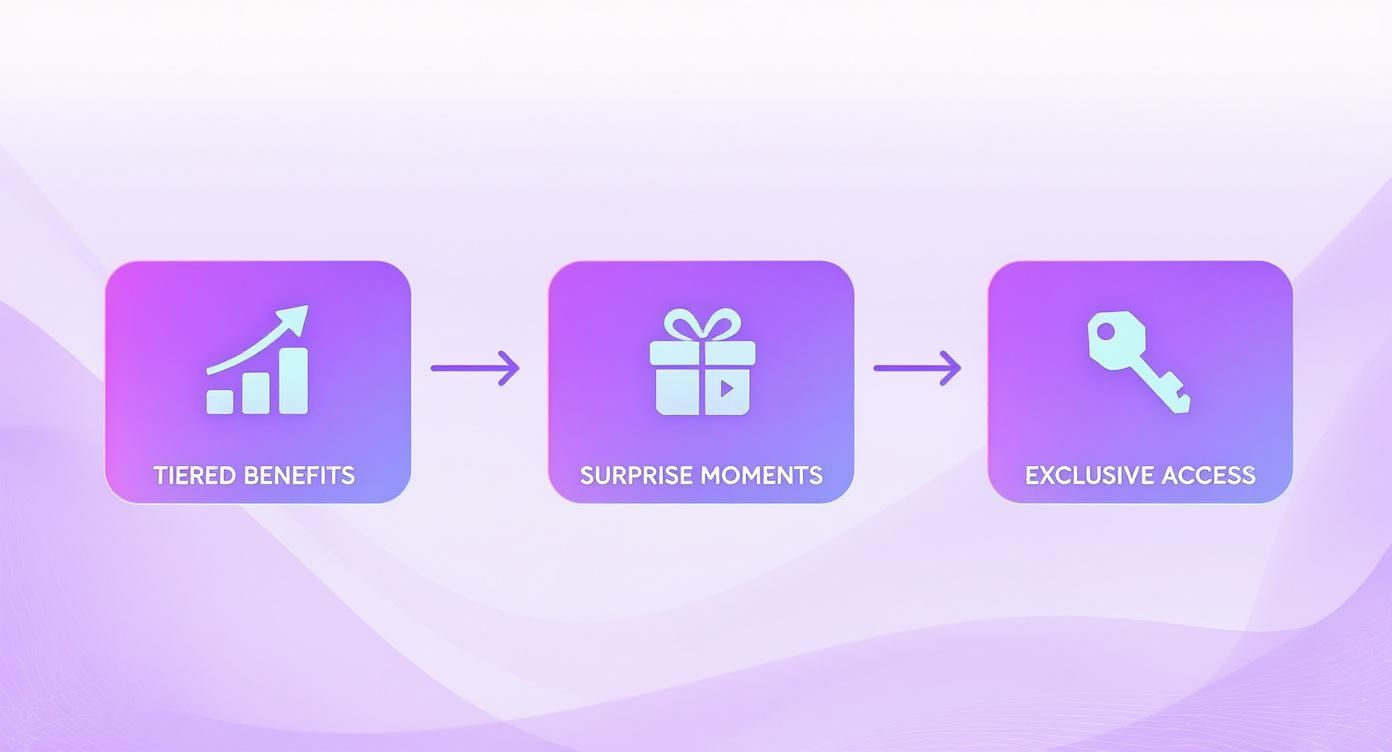
The trick is making these tactics—like surprise perks or exclusive access—feel like a natural part of the experience, not just some tacked-on loyalty program. That seamless integration is what makes a customer journey feel truly special and keeps them coming back for more.
Turning Customer Service into Proactive Engagement
Let's be honest, great customer service isn't just about putting out fires anymore. The real magic happens when you shift from a reactive mindset—waiting for things to break—to a proactive one where you prevent problems before they even start. This is how you transform your support team from a cost center into a powerhouse for building loyalty and boosting engagement.
Every time a customer interacts with you, it's a chance to build a stronger connection. When you start anticipating their needs instead of just reacting to their requests, you create a much smoother, more positive journey. Think about it: you could use data to spot someone who seems stuck on your website and offer help before they even have to ask.
From Reactive Fixes to Proactive Solutions
The old-school model of customer service is pretty straightforward: a customer has a problem, they call you, and you fix it. But what if you could spot that problem before it ever becomes a point of frustration? That’s what proactive engagement is all about—seeing the early warning signs and stepping in with a helpful hand.
Imagine an online store notices a customer keeps looking at the same jacket but never buys it. A proactive system could pop up a live chat window offering to answer questions about the fit or send over a sizing guide. That simple move turns a moment of hesitation into a helpful, supportive conversation.
This approach isn't just a "nice-to-have"; it's essential. Customer patience is at an all-time low. The data shows that 70% of customers will ditch a brand after just two poor experiences, and a staggering 72% will leave after only three. Things like long hold times and having to repeat the same information over and over are huge sources of that frustration. If you want to dive deeper, these customer experience statistics and why they matter really show how high the stakes have become.
Building a Foundation for Self-Service Success
A huge part of being proactive is empowering customers to help themselves. Not every question needs a live agent, and frankly, most people would rather find the answer on their own if they can. This is why a well-organized, comprehensive knowledge base or FAQ section is one of the most powerful engagement tools you can create.
When people can get instant answers 24/7, they feel more in control and satisfied. Plus, it frees up your human agents to handle the more complex, high-stakes conversations where their empathy and problem-solving skills can really make a difference.
Here are a few practical ways to build a proactive engagement hub:
- Dig into your support tickets. Are you seeing the same questions pop up again and again? If dozens of people are asking the same thing, that's a signal to create a detailed knowledge base article or a quick video tutorial.
- Bring in smart chatbots. AI tools like Yoonoo can be fantastic for handling those initial, common questions. They can point users to the right resources or, if needed, pass the conversation seamlessly to a human agent with all the context already gathered.
- Obsess over first-contact resolution. When a customer does need to talk to a person, make it your mission to solve their problem on the very first try. It shows you respect their time and are serious about getting them what they need.
By anticipating needs and providing easy paths to solutions, you're not just providing service; you're building confidence. You're showing customers that you're on their side, ready to help them succeed.
Ultimately, shifting your customer service team to a proactive model is about changing the culture. It's about training your team to look for opportunities to help, not just tickets to close. This shift doesn't just happen overnight, but it leads to happier, more loyal customers who feel understood and valued at every turn.
Got Questions About Customer Engagement? We’ve Got Answers.
Even with the best game plan, a few questions always pop up when you start focusing on customer engagement. Getting these details sorted out is what makes the difference between a strategy that just looks good on paper and one that actually builds real, lasting connections.
Let's dive into some of the most common questions and concerns we see from businesses trying to level up their engagement.
I Need a Quick Win. What's the Fastest Way to Boost Engagement?
Forget about launching some massive, complex system right out of the gate. The quickest way to get the ball rolling is incredibly simple: just listen and respond.
Seriously, start by opening up a direct line for your customers to talk to you. This doesn't have to be complicated. It could be a quick post-purchase survey, a fun poll on your Instagram story, or even just paying closer attention to your reviews and social media comments.
But here’s the most important part: you have to act on what you hear. When you take the time to reply to comments and reviews—the good, the bad, and the ugly—it sends a huge signal. It tells people you're not just shouting into the void; you're actually listening and their opinion means something. That simple act of acknowledgment makes a customer feel seen and valued, and you can start doing it today.
This feedback loop is the bedrock of any solid engagement strategy. It starts a conversation and makes customers feel like they're part of your brand’s journey, not just people buying your stuff.
How Do I Know if My Engagement Efforts Are Actually Working?
Measuring engagement means looking beyond the easy "vanity metrics" like page views or how many likes a post gets. Sure, those numbers are nice to look at, but they don't tell you if you're building a genuine connection. You need to track Key Performance Indicators (KPIs) that show a much deeper relationship.
For a well-rounded view, you should be tracking a mix of financial and behavioral signs:
- Customer Lifetime Value (CLV): Is the total amount a customer spends with you going up over time? This is a huge sign of loyalty.
- Repeat Purchase Rate: Are customers coming back for more? This is a straightforward measure of their trust in your brand.
- Net Promoter Score (NPS): On a scale of 0-10, how likely are your customers to recommend you to a friend? This is a classic for gauging satisfaction and word-of-mouth potential.
- Session Duration and Feature Usage: Are people sticking around longer on your site or using more features in your app? This shows they're finding real value in what you offer.
When you pull these different data points together, you get a much clearer picture. You can see not just if people are interacting, but how deeply they're connecting and whether your work is truly paying off.
Is AI for Customer Engagement Just for Big Companies?
Not anymore. It's a common myth that you need a massive budget and a team of data scientists to use AI. The truth is, there are tons of affordable, easy-to-use tools out there that give small businesses access to the same powerful technology.
The trick is to start small with a very specific goal. Don't try to boil the ocean and automate everything at once. Pick one pain point where you know you can make a real impact.
For example, a great place to start is with an AI-powered chatbot on your website. It can handle common questions 24/7, which instantly makes you more responsive and frees up your team's time. From there, maybe you explore an email platform that uses AI to send more personalized messages based on what a customer has looked at or bought. Many modern CRMs even have AI features baked right in to help you spot trends in your own data.
Start with one clear win, show that it works, and then build from there.
Ready to provide instant, intelligent support on your website? Yoonoo lets you build a smart AI chatbot in just five minutes, no coding required. Start for free and see how easy it is to communicate better with your customers at https://yoonoo.ai.