How to Improve Customer Service in Simple Steps

Improving customer service is about more than just being polite—it’s a direct line to growing your business. The secret? It's a mix of genuine human connection, smart technology, and a real commitment to tracking what actually works. This guide breaks down exactly how to build a service experience that makes you stand out.
Why Better Customer Service Is Your Best Growth Strategy

Let's get one thing straight: great customer service is a revenue generator, not a cost center. When customers feel heard and valued, they don't just stick around—they spend more. In fact, seven out of 10 consumers admit they’ve spent more money just to do business with a company that delivers fantastic service.
Every single interaction is a chance to build up your brand and earn loyalty. One positive experience can create a customer for life, but just one negative moment can send them running to your competition. This isn't just about damage control; it's about proactively creating memorable, positive touchpoints.
The Real Cost of Getting It Wrong
Dropping the ball on customer support comes with a hefty price tag. Poor service costs U.S. companies an estimated $75 billion a year. That’s a staggering number.
But the financial bleeding doesn't stop with lost sales. It also hits your team hard. High turnover in support roles is a huge drain, with the cost to replace a single agent hovering around $10,000. And that figure doesn't even touch the hidden costs of sinking morale and lost productivity. If you want to dig deeper, these customer service statistics paint a very clear picture.
This all points to one simple truth: investing in your support team and their tools is a direct investment in your company's health.
"Instead of thinking of service as a cost, consider it an opportunity to earn your customer’s business all over again."
This shift in perspective is everything. It's how you move from just fixing problems to actively building relationships that last.
The Core Pillars of Modern Service
To really build a top-tier service operation, you need to concentrate on the areas that deliver the biggest results. Think of these as the foundation for everything else. We’ll be diving deep into each of them throughout this guide.
Here's a quick look at the three pillars that hold up any great customer service strategy.
Core Pillars of Modern Customer Service
| Pillar | Key Focus | Business Impact |
|---|---|---|
| People | Team training, empathy, and empowerment | Higher agent retention and customer satisfaction |
| Technology | AI chatbots, CRMs, and automation tools | Faster response times and increased efficiency |
| Measurement | Key metrics like CSAT, NPS, and FCR | Data-driven improvements and proven ROI |
By focusing your energy on these three areas, you're not just putting out fires. You're building a system that consistently delights customers and fuels real, sustainable growth.
Building a Support Team That Truly Cares

Technology is a fantastic tool, but let's be honest—the real heart of great customer service will always be your people. Building a team that genuinely cares is about more than just handing them a script and a login. It's about fostering a culture where empathy and proactive problem-solving are second nature.
Every single interaction is a make-or-break moment, especially when 86% of customers will walk away after just one bad experience. Your support agents aren't just ticket-closers; they’re the voice of your brand, shaping how people feel about you one conversation at a time. This means you have to get serious about training that gives them real skills, not just canned responses.
Training Beyond the Manual
Most training manuals fall flat because they treat customer service like a math problem with a single right answer. But real conversations are messy, emotional, and always a little different. This is where practical, hands-on training really shines.
Role-playing is probably one of the most powerful tools you have. Get your team to act out the tough but common scenarios they'll actually face. For example, have one person play a frustrated customer whose package is late, while another practices de-escalating the situation with active listening and patient, positive language. It builds the muscle memory they need to handle stressful moments with grace.
Here are a few other training exercises that actually work:
- "What Went Wrong" Sessions: Grab some real, anonymized support tickets and break them down as a team. Talk about what went well and brainstorm better ways to handle the tricky parts.
- Product Deep Dives: Your team can't help people confidently if they don't know your product inside and out. Set up regular sessions where they have to use the product just like a customer would. This helps them spot potential problems before they happen.
- Empathy Mapping: This is a great one. Have your agents create a detailed persona for a typical customer. What are their goals? What drives them crazy? This simple exercise helps shift the mindset from "closing a ticket" to "helping a person."
"A support rep’s ability to empathize with a customer and craft a message that steers things toward a better outcome can often make all the difference."
Empowerment is the other side of this coin. Nothing slows down a resolution—and annoys a customer—more than an agent who has to "ask a manager" for everything. Give your team the authority to make decisions on the spot, like issuing a small refund or offering a discount to fix a mistake. When you trust your team, they resolve issues faster and show customers you actually value their time.
The Power of Positive Phrasing
It’s not just what you say; it’s how you say it. Training your team to use positive language is a small change that makes a huge difference. It’s all about reframing a negative situation into a path toward a solution.
Imagine a customer asks about a product that’s out of stock.
- Negative Framing: "I can't get you that product. It's unavailable until next month."
- Positive Framing: "That product will be available next month. I can place the order for you right now and ensure it ships the moment it arrives."
See the difference? The first response is a brick wall. The second is a solution. You're not ignoring the problem, but you’re focusing on what you can do, reassuring the customer that you're on their side. This simple shift in wording can completely transform the interaction.
Weaving Technology into the Human Experience

There's a common fear that bringing more technology into customer service will make it feel cold and impersonal. But I've found the opposite is true when you approach it thoughtfully. The goal isn't to replace your people; it's to free them up.
Think of it this way: smart tools should act as a bridge, handling the routine, predictable work that bogs your agents down. This frees them up to use their empathy and critical thinking on complex issues where a human touch really matters. It's about empowering your team, not sidelining them.
Putting AI to Work for Your Team (and Customers)
AI chatbots are a fantastic place to start. A customer shouldn't have to wait in a queue just to ask, "What's your return policy?" or "Can you track my order?" An AI can handle those questions instantly, any time of day. This quick resolution for simple queries is a massive win for the customer experience.
The real benefit, though, is what this does for your human agents. By automating the basics, you give your team more breathing room and mental energy for the customers who genuinely need their help. A person dealing with a frustrating billing error deserves the full attention of a skilled agent, not someone who just spent the last hour resetting passwords. To see how you can put this into practice, check out our guide on building an effective AI customer support chatbot.
This smart use of AI results in a few key wins:
- Faster answers for common questions, which keeps customers happy.
- Less burnout for your agents since they aren't stuck on monotonous tasks.
- More rewarding work for your team as they focus on high-impact problem-solving.
By automating routine tasks, AI agents ease the workload on human agents, allowing them to focus on tasks requiring a more personal touch.
It’s all about letting technology support your team's most valuable skills.
A 360-Degree Customer View with a Solid CRM
A good Customer Relationship Management (CRM) system is your team's secret weapon for making service feel personal. It pulls everything into one place, giving your agents a complete history of every customer interaction at a glance.
Imagine your agent pulling up a customer's entire purchase history, past support tickets, and even previous feedback. They can greet them by name and immediately understand their situation without forcing the customer to repeat themselves. It’s the difference between feeling like a ticket number and feeling like a valued customer.
The investment in these tools is skyrocketing for a reason. The customer service software market is expected to reach $68.19 billion by 2031, and a recent study shows 85% of decision-makers believe customer service will be a bigger revenue driver by 2025. You can dig into more customer service software trends on answerconnect.com.
It's clear that when technology is used to empower your people, great service becomes a powerful engine for loyalty and growth.
Make Personalization Your Secret Weapon
Let's be honest, generic, one-size-fits-all customer support just doesn't cut it anymore. Your customers are savvy, and they expect you to know who they are. They don't just appreciate personalized interactions; they demand them.
This is your chance to shine. When you treat each person like an individual, not just another ticket number, you stop being a good service provider and become an unforgettable one.
True personalization goes way beyond dropping a customer's first name into an email. It’s about using what you know about them to have smarter, more helpful conversations. It’s about making them feel seen and understood.
Imagine a retail agent who can see a customer's order history. Instead of just processing a return, they could suggest the perfect accessory for a past purchase or let them know a sold-out item from their wishlist is finally back. Suddenly, a routine support ticket becomes a genuinely valuable experience.
Use Customer Data to Have Smarter Conversations
Your best tool for personalization is the data you already have. Your CRM should be a goldmine of insights, giving your team a 360-degree view of every customer at a glance.
Think about a software company. When a user reports a bug, the support agent shouldn't be flying blind. They should instantly see:
- The features this specific user engages with the most.
- A full history of their past support tickets.
- The subscription plan they're currently on.
With this context, the agent’s response goes from generic to genius. Instead of sending a link to a massive help doc, they can offer a specific solution tailored to how that user actually uses the software. This shows you're not just closing a ticket; you're paying attention.
The numbers back this up. By 2025, a staggering 76% of customers will expect this kind of tailored interaction. And brands that get it right? They're 71% more likely to see a boost in customer loyalty. You can dig into more personalization trends at Zendesk to see just how critical this is.
Keep Your Tone Consistent Everywhere
Personalization isn’t just for support tickets; it has to be part of your brand's DNA across every single channel. The friendly, helpful vibe you create in a live chat needs to feel the same as the voice customers hear on your social media or in your marketing emails.
A consistent, personal tone builds trust. When customers know what to expect from you, no matter where they interact, they feel more connected and secure with your brand.
This consistency is what makes your brand feel human and reliable. Whether someone slides into your Instagram DMs or replies to a newsletter, the experience should feel like one continuous conversation with a company that gets them. That’s how you build the deep-seated loyalty that turns happy customers into your biggest fans.
How to Measure Customer Service Performance
You can't fix what you don't measure. When it comes to customer service, flying blind is the quickest way to lose customers. You need to get past feel-good assumptions and dig into the real numbers—the Key Performance Indicators (KPIs) that tell you what’s actually happening.
Without data, you’re just guessing. Tracking the right metrics is what turns a reactive support team into a proactive part of your growth strategy. It shows you exactly where your team shines and, more importantly, where you need to focus your efforts for the biggest wins.
Key Metrics That Actually Matter
You could drown in a sea of metrics, but a handful truly give you the pulse of your customer experience. Stick with these, and you'll get clear, actionable insights without the noise.
- Customer Satisfaction (CSAT): This is your immediate gut check. It’s usually a quick post-chat survey asking, "How satisfied were you with our help today?" A high CSAT score means your team is hitting the mark in the moment.
- Net Promoter Score (NPS): Think of this as the "long game" metric. It asks customers how likely they are to recommend your business, which gives you a solid read on overall loyalty and brand health, not just one interaction.
- First Contact Resolution (FCR): This is a huge one. It measures the percentage of customer issues you solve on the very first try—no follow-ups, no transfers. A high FCR shows your team is efficient, knowledgeable, and, most of all, respects your customers' time.
These three give you a well-rounded picture of short-term happiness, long-term loyalty, and team efficiency. If you want to dive deeper, you can explore other customer satisfaction measurement methods to find the perfect fit.
Here's a pro tip: Don't treat your metrics like a report card. They’re a roadmap. The point isn’t just to hit a number; it’s to understand the story behind it and use that story to make smarter decisions.
This chart is a perfect example of what happens when you stop guessing and start measuring.
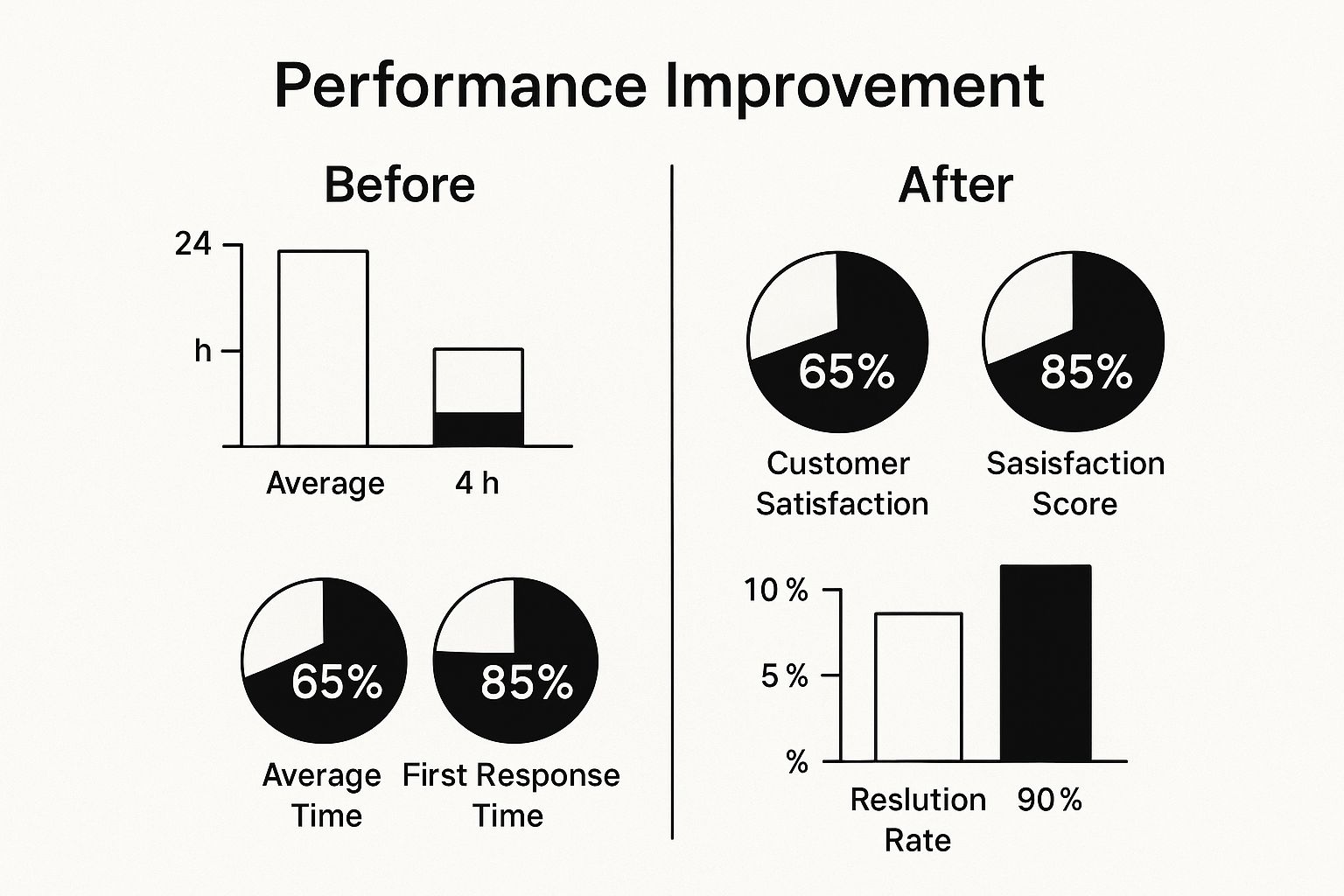
As you can see, once they started tracking and making changes, their response times plummeted while satisfaction and resolution rates shot up. That’s the power of data.
Choosing The Right Customer Service KPIs
Not every business needs to track the same things. Your KPIs should directly reflect your primary goals. This table breaks down how to align your metrics with what you’re trying to achieve.
| Business Goal | Primary KPI | What It Measures |
|---|---|---|
| Improve team efficiency | Average Handle Time (AHT) | The average time an agent spends on a single customer interaction. |
| Increase customer loyalty | Net Promoter Score (NPS) | The likelihood of customers recommending your brand to others. |
| Boost immediate happiness | Customer Satisfaction (CSAT) | Satisfaction with a specific, recent support interaction. |
| Reduce customer effort | First Contact Resolution (FCR) | The percentage of issues solved in the first interaction. |
Choosing the right KPIs isn't just about picking from a list; it's about being intentional. Connect your metrics directly to a business outcome, and you'll get insights that actually move the needle.
Turning Insights Into Action
Collecting numbers is easy. The real work is turning them into tangible improvements. If your CSAT scores take a nosedive, don’t just report the number—investigate it. Read the comments. Do you see patterns? Maybe everyone is getting stuck on a new feature, or perhaps there's a gap in your team's training on a specific topic.
Learning the art of making your customer experience surveys effective is crucial for getting feedback you can actually use. This whole process is a loop: you measure, you analyze, you act, and then you measure again to see if your changes worked. That’s how you build a customer service experience that people genuinely love.
Common Questions About Improving Customer Service
Diving into a customer service overhaul can feel like a huge undertaking. I've seen many businesses get stuck because they know they need to improve, but they aren't sure where to start, how to handle the costs, or how to prove it's all worth it. Let’s tackle some of the questions I hear most often.
What Is the Most Important First Step?
Forget about buying new software or rewriting scripts, at least for now. The most critical first step is simply to listen. Before you can fix anything, you have to understand what’s actually broken from the perspective of the people who matter most.
You need to gather honest feedback from two key groups: your customers and your own support team.
For customers, use a mix of methods to get the full story. Surveys, online reviews, and even just picking up the phone will tell you their biggest pain points. At the same time, sit down with your agents. They’re on the front lines every single day and know exactly which processes are clunky or where they don't have the tools to solve problems efficiently.
This approach ensures you’re fixing real problems, not just the ones you think exist. It makes your efforts targeted and far more likely to work right out of the gate.
How Can a Small Business Improve Service on a Tight Budget?
You don’t need a massive budget to make a real difference. For smaller businesses, the secret is focusing on empowerment and efficiency—two things that cost very little but deliver huge returns in customer happiness.
Start by empowering your team. Give them the authority to solve common issues on the spot without needing a manager's sign-off for small things, like a $10 refund or a discount on a future purchase. This simple shift cuts down resolution times and makes customers feel genuinely heard and valued.
Next, set up a simple feedback loop. A one-question email survey sent after a support ticket is closed is a super low-cost way to keep a pulse on satisfaction. Finally, create a shared knowledge base. Honestly, even a well-organized Google Doc works wonders for ensuring your team provides consistent, accurate answers every single time.
Want more ideas? Check out these other proven strategies to improve customer satisfaction that can help boost loyalty and keep customers coming back.
How Do I Measure the ROI of Better Customer Service?
Proving the return on investment (ROI) is all about connecting your service efforts to real business results. To do this, you need to track metrics that go beyond simple satisfaction scores and link directly to revenue and retention.
Here are the key indicators I always recommend watching:
- Customer Lifetime Value (CLV): Are customers who have positive support experiences spending more with you over time? You should be able to see a direct correlation.
- Customer Churn Rate: As your Customer Satisfaction (CSAT) or Net Promoter Score (NPS) goes up, your churn rate should be going down. If it isn't, something's off.
- Upgrade/Repeat Purchase Rate: Look at whether customers are more likely to upgrade their plan or buy from you again right after a great service interaction.
By tying your service KPIs to these hard financial metrics, you can draw a clear, compelling line from your investment in great service straight to your company's bottom line.