How to Improve Customer Satisfaction: Tips to Boost Loyalty

If you really want to improve customer satisfaction, you have to think beyond just chasing high survey scores. It's about building real trust and loyalty with your customers. Every single interaction is a chance to prove they made the right choice by picking your brand.
Why Customer Satisfaction Is More Than Just a Score
True customer satisfaction isn't just a number you track on a report—it's the bedrock of a healthy, growing business. I've seen too many companies fall into the trap of obsessing over high scores without ever stopping to understand what’s actually behind them.
Here's the thing: a customer can be perfectly happy with one transaction, but that single moment of satisfaction doesn't mean they'll come back. It certainly doesn't mean they'll recommend you.
The real goal? Turning those one-time happy customers into genuine, long-term advocates for your brand. That kind of shift only happens when you build a positive experience on a foundation of trust. Think of it like this: satisfaction is the immediate reaction, but loyalty is the long-term relationship.
The Satisfaction and Loyalty Gap
There's a troubling disconnect that a lot of businesses are starting to notice. Even when their satisfaction metrics look okay, the things that actually drive loyalty are getting weaker.
A global study from the Qualtrics XM Institute brought this to light. It showed that while satisfaction levels have stayed pretty steady, key things like consumer trust and the intent to buy again are actually going down. This is a huge wake-up call. It proves a positive rating doesn't automatically create a loyal advocate.
This gap is where you have a massive opportunity. To truly boost customer satisfaction, you have to look at the entire customer journey, not just one isolated moment. For some great ideas on this, check out these top strategies for improving your e-commerce customer experience.
Moving Beyond Surface-Level Metrics
Focusing only on a CSAT score is like judging a book by its cover. It gives you a tiny piece of the story but completely misses the plot. To get the full picture, you have to dig a lot deeper.
A customer might give you a 5-star rating for a quick fix but still feel totally disconnected from your brand if the conversation was robotic and impersonal. Lasting loyalty comes from making people feel valued, not just processed.
To get past those surface-level numbers, you need to understand how different metrics play together. Seeing the nuances between various scores gives you a much clearer view of what's really going on. A great starting point is our guide on customer satisfaction measurement methods.
When you start focusing on the deeper connections between experience, trust, and repeat business, you're setting the stage for real, meaningful improvements.
The Hidden Costs of a Bad Customer Experience

Every frustrating customer interaction has a price, and it's much higher than you might think. A single bad experience doesn't just end with one unhappy person. It creates ripples that can seriously damage your brand's reputation and bottom line for years to come.
In our hyper-connected world, news of poor service travels at the speed of a click. One negative review or angry social media post can reach thousands of potential customers, silently steering them toward your competitors before they even think about giving you a chance. This is why learning how to improve customer satisfaction is no longer optional; it’s a core business function.
Think about the financial hit. It can cost five times more to attract a new customer than to keep an existing one. So when you fail to meet expectations, you aren't just losing a single sale—you're flushing marketing dollars down the drain and starting that expensive acquisition cycle all over again.
Where Customers Lose Patience
Certain friction points are notorious for driving customers away. If you can spot these and fix them, you're already halfway to preventing churn and protecting your revenue.
Here are some of the most common frustrations I've seen push customers out the door:
- Long Wait Times: Whether they're on hold or waiting for a chat response, delays make people feel like their time isn't valued. It's a killer.
- Repeating Information: There's almost nothing more irritating than having to explain your problem to three different people. It screams inefficiency.
- Unresolved Issues: When a problem isn’t fixed on the first try, confidence in your brand plummets. Fast.
- Impersonal Service: Robotic, scripted answers make customers feel like just another ticket number, not a person.
"Investing in a great customer experience isn't a 'nice-to-have'—it's essential for survival. Today's customers have more choices than ever, and they won't hesitate to leave if they feel ignored or undervalued."
This isn't just a feeling; the data backs it up completely. Customer expectations for good service are through the roof, and the consequences for failing to meet them are immediate and drastic.
The Numbers Behind Customer Churn
The research is clear: customer experience has become a primary reason people choose one brand over another. A whopping 99% of consumers say customer service is important in their choice of company, with 74% calling it essential.
With stakes this high, even a minor slip-up can be costly. For example, a staggering 70% of customers will abandon a brand after just two negative experiences. You can dive deeper into these trends in this detailed customer experience analysis.
This reality creates a clear sense of urgency. A bad experience costs you more than a single lost sale. It also means a damaged reputation, higher marketing costs, and even lower employee morale from dealing with frustrated people all day. Focusing on customer satisfaction isn't just about being nice; it’s a fundamental strategy for long-term growth and stability.
Turn Customer Feedback into Real Improvements

Your customers are handing you a roadmap for growth every single day. The real challenge isn't just listening—it's knowing what to do with what you hear. Simply collecting feedback is one thing, but the magic happens when you turn those insights into real, tangible actions that customers can see and feel.
Don't get stuck on basic surveys. The richest feedback often comes from unstructured, honest sources like social media comments, in-depth customer interviews, and even patterns buried in your support tickets. These channels offer a goldmine of unfiltered opinions. Getting better at customer satisfaction means building a solid system to capture and make sense of all this data.
From Listening to Action
The first move is to shift from passively gathering data to actively listening. This involves creating a process to sort feedback and pinpoint recurring themes. Are multiple people complaining about a clunky checkout process? Is one particular feature causing endless frustration? Catching these patterns early is the key to prioritizing changes that will actually make a difference.
The best companies don't just solve problems as they come up; they use feedback to stop future issues from ever happening. When a customer sees their suggestion become a reality, they transform into a powerful advocate because they feel genuinely heard and valued.
Think about a small online shop that keeps getting support tickets asking about its return policy. Instead of just answering each ticket one by one, they use that insight. They create a clear, easy-to-find FAQ page and add a link to it right on their product pages. It’s a simple fix, but it cuts down on support requests and creates a much smoother experience for every shopper.
Closing the Feedback Loop
Making changes based on feedback is only half the job. The final, most important step is to "close the loop" by telling your customers what you did. This shows them their voice truly matters and that you're serious about making their experience better.
You can do this in a few ways:
- Email Newsletters: Announce new features or policy updates that came directly from customer suggestions.
- Social Media Updates: Share how you improved a process based on what the community said, and be sure to thank them.
- Personal Follow-ups: For really valuable feedback, a direct email to the customer who made the suggestion can build incredible loyalty.
To get the most out of this process, think about using technology to help. You can learn how AI improves customer feedback integration to analyze huge amounts of data way more efficiently. It's also worth exploring different https://yoonoo.ai/blog/customer-feedback-collection-tools to find the right fit for your business.
By creating this transparent cycle of listening, acting, and communicating, you build a powerful engine for constant improvement and lasting customer happiness.
Give Your Team the Power to Make Customers Happy

Your frontline team is the heart of your customer experience. It’s their ability to connect, solve problems, and show a little empathy that turns a frustrated person into a lifelong fan—far more than any slick marketing campaign ever could.
Too many companies hamstring their support agents with rigid scripts and endless approval loops. It feels safe, I get it. But this approach is a creativity killer and a resolution roadblock. It leaves everyone, agent and customer alike, feeling stuck and powerless. The real magic happens when you swap strict rules for a flexible framework that lets your team solve problems quickly and genuinely connect with people.
This isn't about letting chaos reign. It’s about trusting your team to make smart calls on the spot. Imagine an agent who can offer a small, one-time discount to fix an issue right then and there. That single action can flip a negative experience into a positive one that the customer will remember.
Let Them Make the Call
Empowerment starts with trust. Plain and simple. When you give your team the authority to handle things without needing a manager's okay for every little detail, you speed everything up. More importantly, you show your people you have faith in their judgment, and that confidence shines through in every customer interaction.
Here’s a practical way to get started:
- Set a Discretionary Budget: Give them a clear allowance, say up to $25, to resolve a problem without needing approval. It's a game-changer.
- Encourage Creative Fixes: Instead of just issuing a refund, let them offer things like free expedited shipping on a future order or a bonus product.
- Have Their Back: Support their decisions, even if they aren't perfect. Treat mistakes as coaching moments, not reasons to pull back the reins.
This doesn't just lead to happier customers; it builds incredible team morale. Agents who feel trusted are naturally more invested in their work and driven to provide amazing service.
Invest in Their Growth, Continuously
Your team can't solve problems they don't understand. Training needs to be an ongoing part of their development, not just a one-and-done thing during onboarding. They need to be confident and prepared for whatever comes their way.
An agent who knows your product inside and out can do more than just answer basic questions. They can anticipate needs, suggest smarter solutions, and provide a level of expertise that builds unshakable customer trust.
I've always found it best to focus training on two critical areas:
- Deep Product Knowledge: This means regular sessions on new features, workarounds for common bugs, and sharing best practices.
- Advanced "People" Skills: This is all about training on active listening, showing empathy (even when it's tough), and de-escalating tense situations.
When you invest in your team's skills and then trust them to use those skills, you create an incredible force for customer happiness. An empowered team is so much more than a support function—it’s the engine that drives satisfaction and keeps customers coming back.
Use Technology to Strengthen Human Connections
The goal of technology isn't to replace your people—it's to free them up to do what they do best: connect with customers on a human level. When you strategically bring in tools like AI chatbots, they can take over the repetitive, everyday tasks. This allows your expert agents to focus on the complex conversations where their skills truly make a difference.
Think about the questions your team answers over and over. Things like "Where is my order?" or "What are your business hours?" are perfect candidates for an AI chatbot like Yoonoo. It can deliver instant, accurate answers 24/7, which means customers get help right away and your overall support volume drops.
This creates a win-win. Customers get quick solutions for simple problems, and your team gets to spend their valuable time on nuanced issues that require real empathy and critical thinking.
Let AI Handle the Simple Stuff
Bringing an AI chatbot into your workflow is like giving your support team a super-efficient assistant. The bot can instantly pull up a customer's order history, answer policy questions, and point users to the right resources on your site. This immediate support is a huge driver of customer satisfaction.
Instead of making someone wait in a queue just to ask a basic question, the AI provides an answer on the spot. This not only makes customers happier but also lets your human agents dedicate their full attention to more delicate situations, like resolving a shipping error or walking a frustrated customer through a tough problem.
This blend of technology and a human touch has a direct, measurable impact on key performance indicators.
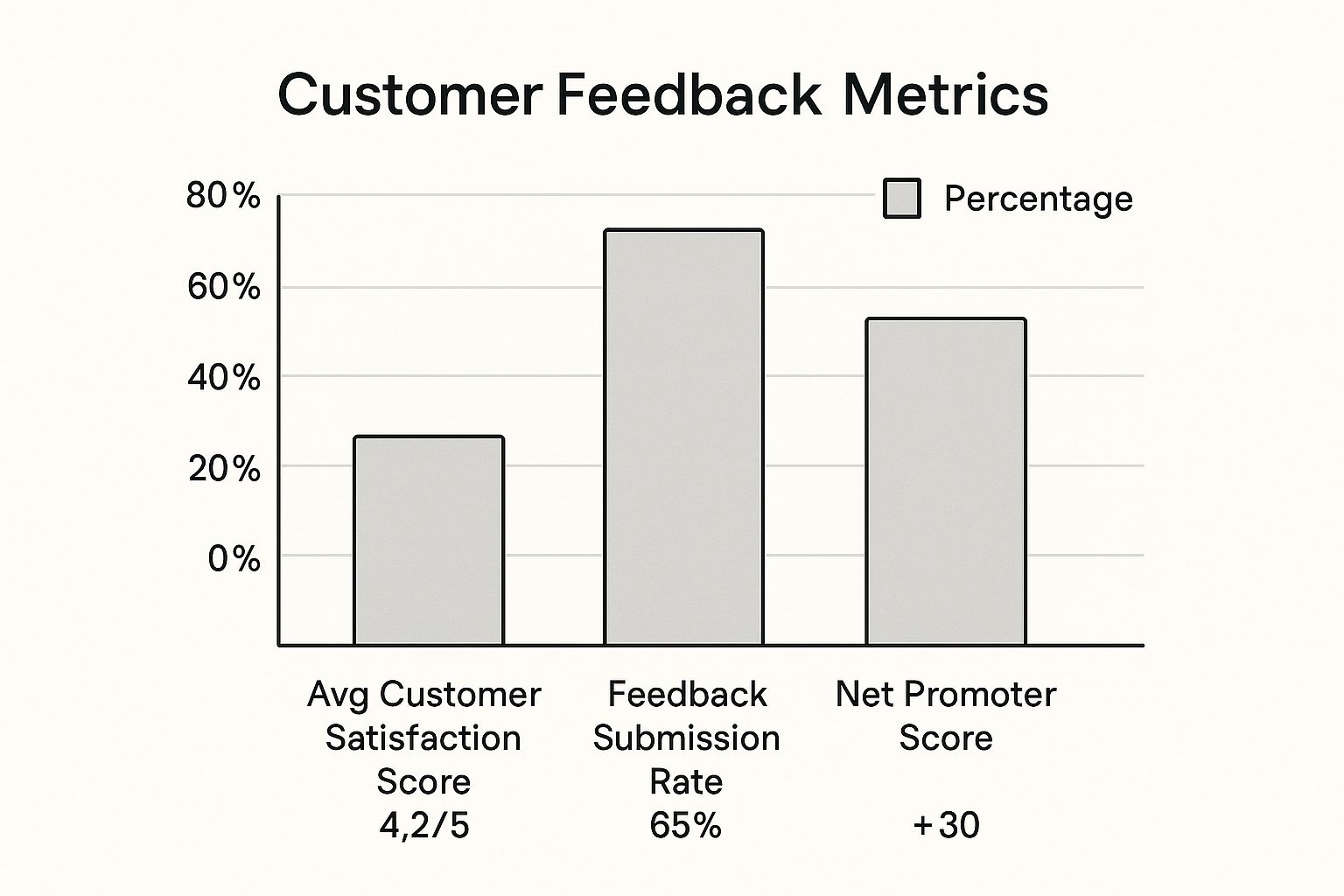
As these metrics show, a well-rounded strategy that includes smart technology directly contributes to higher satisfaction scores and stronger customer loyalty.
To make this more concrete, let's look at how specific technologies can solve common service headaches.
Strategic Implementation of Customer Service Technology
| Challenge | Technological Solution | Impact on Customer Satisfaction |
|---|---|---|
| High volume of repetitive questions | AI-powered chatbots (e.g., Yoonoo) | Provides instant, 24/7 answers, reducing wait times and frustration. |
| Lack of customer context for agents | Integrated CRM and helpdesk systems | Agents see full customer history, enabling more personalized and efficient support. |
| Inconsistent support across channels | Omnichannel support platform | Creates a seamless experience whether the customer uses chat, email, or phone. |
| Difficulty gathering feedback | Automated post-interaction surveys | Gathers immediate feedback, making customers feel heard and providing actionable data. |
Implementing these tools isn't about automation for its own sake; it's about building a smarter, more responsive support system that makes customers feel valued.
Personalize the Experience at Scale
Technology also gives you powerful ways to make interactions feel more personal, even when they're automated. A smart AI can access a customer's history in milliseconds, greeting them by name and recalling past purchases or support tickets. This context makes the conversation feel relevant and less robotic right from the start.
This kind of personalization builds a stronger connection and shows customers you appreciate their business. It’s no surprise, then, that 80% of companies are planning to increase their investment in the customer experience (CX). The numbers back it up: 61% of consumers will pay more for a good experience, and a staggering 86% will leave a brand after just two bad ones. You can find more data on this in a detailed CX report.
Technology should remove friction, not relationships. Use it to make every interaction faster, smarter, and more personal, and you’ll create a customer journey that feels both seamless and genuinely human.
By intelligently blending AI efficiency with the irreplaceable value of human empathy, you build a support system that is both responsive and deeply satisfying. This smart mix of tech and talent is the key to building lasting customer relationships.
Got Questions About Customer Satisfaction? We’ve Got Answers.
Even with a solid plan, you're bound to run into questions when you’re focused on improving customer satisfaction. It's a massive topic, and it's easy to get bogged down in the weeds of different metrics, tools, and what really works.
Let's tackle some of the most common sticking points with straightforward, practical answers. This will help you put your energy where it'll actually make a difference for your customers and your business.
What Are the Most Important Metrics to Track?
You could track dozens of metrics, but honestly, it’s best to start with the big three. Each one gives you a different piece of the puzzle, so together, they paint a really clear picture of how you're doing.
Why all three? Because focusing on just one can be misleading. A great CSAT score after a single chat is nice, but if your NPS is in the basement, it could signal a deeper problem with your brand that one good interaction can't fix.
Here’s the trio I always recommend focusing on:
- Net Promoter Score (NPS): This is all about long-term loyalty. It asks that one simple question: "How likely are you to recommend us?" This is your North Star for brand health and whether you're creating true fans.
- Customer Satisfaction Score (CSAT): Think of this as an in-the-moment happiness check. It’s that quick survey right after an interaction asking customers to rate how satisfied they were with that specific experience.
- Customer Effort Score (CES): This one gets straight to the point: How easy are you to do business with? It asks how much work a customer had to put in to get their issue resolved, instantly flagging any frustrating hoops you're making them jump through.
How Can a Small Business Improve Satisfaction on a Budget?
You absolutely don't need a massive budget to make your customers happy. In my experience, some of the most impactful strategies cost nothing at all—they're all about your mindset and getting creative.
The simplest place to start is by personally connecting with your customers. Jump into your social media comments, send a quick, personal thank-you email after a purchase, and let people see there are real humans behind the logo. You can even use free tools like Google Forms to whip up simple and effective feedback surveys.
The most powerful, cost-effective tool you have is building a customer-first culture. When your team feels empowered to solve problems right then and there with a personal touch, it leaves a bigger impression than any expensive system ever could.
When Is the Right Time for an AI Chatbot?
The lightbulb moment for bringing in an AI chatbot is when you realize your team is spending a good portion of their day answering the same handful of questions over and over again. Think of it less as a replacement for your team and more as a super-efficient assistant.
A great way to start is by listing your top 5-10 most common questions. I bet they look something like this:
- "What are your hours?"
- "What's your return policy?"
- "Where's my order?"
An AI chatbot can field these questions 24/7 without breaking a sweat. This immediately frees up your amazing human agents to focus their brainpower and empathy on the more complex, nuanced issues where they can truly shine. It's the smartest way to scale your support without letting quality slip.
Ready to provide instant answers and give your team a break? With Yoonoo, you can build a smart AI chatbot in just five minutes—no coding needed. See for yourself how easy it is to boost your customer satisfaction at https://yoonoo.ai.