A Guide to Chatbots in Healthcare
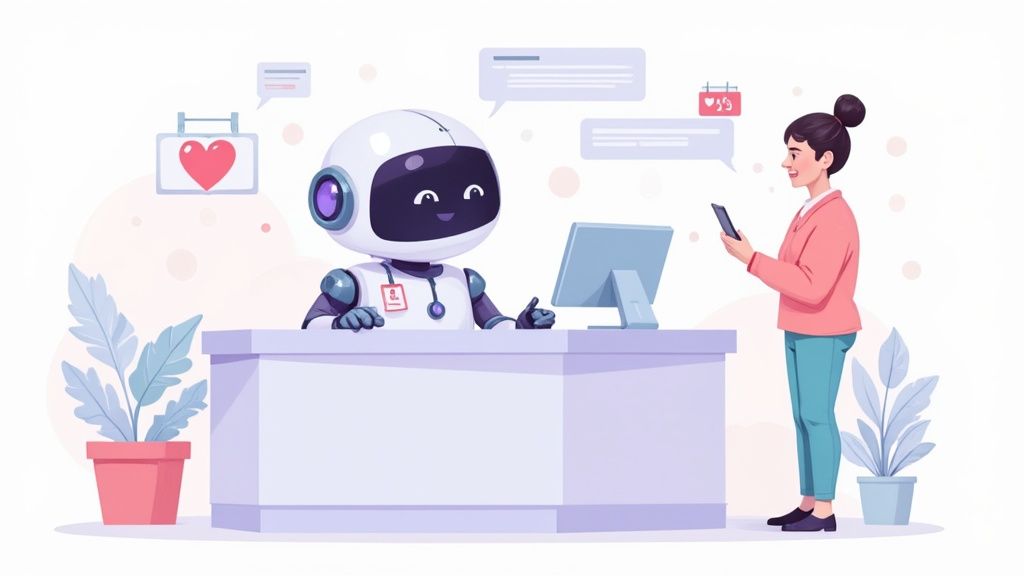
Think of a healthcare chatbot as a digital first-responder for your clinic or hospital. These AI-powered assistants are designed to help patients and providers with a whole range of tasks, from booking an appointment in the middle of the night to answering common questions instantly. They essentially act as a digital front door, offering around-the-clock help and making everything run a bit smoother.
Your Digital Front Desk for Modern Healthcare

Picture a tireless receptionist for your practice, one who's wide awake at 3 AM to help a patient book a slot or answer a quick question about their medication. That’s the core idea behind chatbots in healthcare. They're smart software programs built to mimic human conversation, offering immediate help in a system that’s often stretched thin by long waits and administrative overload.
These aren't just basic Q&A bots. They run on artificial intelligence (AI) and something called Natural Language Processing (NLP). You can think of NLP as the bot's ability to understand context and intent, not just keywords. It’s what allows the chatbot to grasp what a person is really asking and give a genuinely helpful answer, much like a person would.
The Core Problem They Solve
Let's be honest, one of the biggest frustrations in healthcare is simply getting access to information quickly. Patients need answers, and front-desk teams are often swamped. Chatbots are designed to fill that exact gap by automating the routine stuff, which frees up the human staff to handle more critical patient care.
This technology tackles a few major headaches for everyone involved:
- Immediate Information Access: No more waiting on hold. Patients can get instant answers to simple questions about clinic hours, available services, or how to prep for a procedure.
- Reduced Administrative Burden: Chatbots can manage appointment scheduling, send out reminders, and even handle the initial patient intake forms. This takes a huge load off the front-desk staff.
- Improved Patient Engagement: When patients can get personalized information right away, they're more likely to take an active role in their own health.
A healthcare chatbot serves as the first line of support. It efficiently sorts through inquiries and makes sure every patient gets an immediate response, no matter the time of day. This creates a much more responsive, patient-focused experience from the get-go.
Demystifying the Technology
At their heart, these chatbots are built to be simple and easy to use. They can be added right into a hospital's website, a patient portal, or a mobile app. For any organization considering this, getting one up and running has become surprisingly easy. If you want to see what's involved, you can learn how to create a chatbot for a website and see how accessible the process is.
Once you pull back the curtain on the AI, you can see its real-world value. For patients, it’s all about getting clear answers and support whenever they need it. For providers, it’s about building a more efficient system that ultimately leads to better care for everyone.
How Chatbots Are Changing Patient Care Today
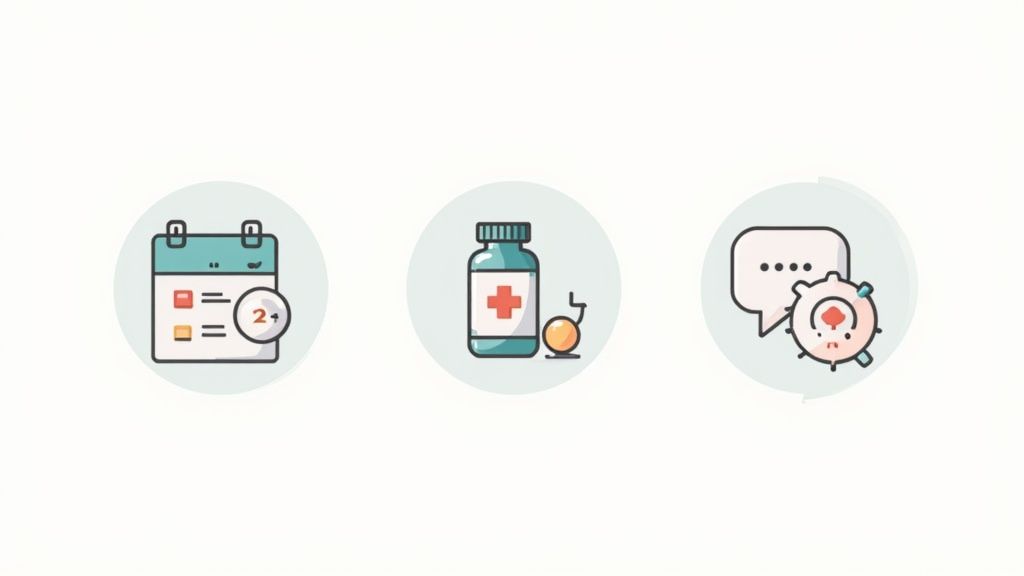
It’s one thing to talk about chatbots in theory, but where do they actually show up in healthcare? The answer is: everywhere. These AI assistants have moved far beyond just answering basic questions. They are now deeply integrated into the patient journey, acting as a crucial link between people and their providers.
Think about the last time you tried to book a doctor's appointment. If it was after hours, you likely had to leave a message and wait. Now, imagine using a chatbot at 10 PM to find an open slot and schedule your visit right then and there. That’s the kind of immediate, practical support that’s making a real difference.
This isn’t just a patient convenience; doctors see the value, too. In fact, a recent look into AI advancements in healthcare found that physicians are overwhelmingly optimistic. A massive 78% give a thumbs-up to using chatbots for appointment scheduling, 76% for finding clinic locations, and 71% for providing basic medication info. When doctors are this onboard, you know the technology is solving real problems.
Common Applications of Chatbots in Healthcare Settings
To see just how versatile these tools are, it helps to break down their use cases. The table below outlines how chatbots fit into both the administrative and clinical sides of healthcare, tackling everything from booking appointments to guiding patients through pre-visit preparations.
| Category | Specific Use Case | Primary Benefit |
|---|---|---|
| Administrative Support | Appointment Scheduling & Reminders | Reduces no-shows and frees up front-desk staff. |
| Administrative Support | Insurance & Billing Questions | Provides instant, 24/7 answers to common financial queries. |
| Administrative Support | Patient Intake & Registration | Gathers necessary information before a visit, speeding up check-in. |
| Clinical Support | Initial Symptom Assessment | Helps patients determine the urgency of their issue and the right next steps. |
| Clinical Support | Medication Adherence & Reminders | Sends alerts and answers questions to improve treatment compliance. |
| Clinical Support | Mental Health & Wellness Checks | Offers a private, non-judgmental space for initial mental health support. |
As you can see, chatbots are becoming the ultimate multitasking assistants, capable of handling routine work so human staff can focus on what they do best: providing hands-on patient care.
Simplifying Administrative Workflows
Let's be honest—the administrative side of healthcare can be a huge bottleneck. Phones ringing off the hook, staff juggling scheduling, and patients on hold. This is where chatbots have their most immediate impact. By taking over these repetitive tasks, they let human staff give their full attention to the patients right in front of them.
Here are a few ways chatbots are taking the administrative load off:
- Effortless Appointment Management: Patients can book, change, or cancel appointments through a simple chat, and the clinic's calendar updates automatically. This simple fix helps slash no-shows and prevents double-bookings.
- Instant Insurance Checks: A chatbot can verify a patient's insurance details in seconds, sorting out eligibility questions long before they arrive at the clinic.
- Smart Patient Routing: Based on a patient's first few messages, a bot can guide them to the right department or provide the correct forms, making the whole intake process smoother.
Enhancing Clinical Support and Patient Guidance
Beyond the front desk, chatbots are also carving out a vital role in patient support. While they’ll never replace a doctor, they act as a fantastic first point of contact for information and guidance, helping people take a more active role in their health.
A great example is a preliminary symptom check. A chatbot can walk a patient through a series of questions to gather information. Based on pre-set clinical guidelines, it can then suggest whether they should monitor their symptoms, book a non-urgent visit, or seek immediate medical help. It's a smart way to manage patient needs and prioritize care.
Important Disclaimer: A chatbot is a guide, not a doctor. It’s designed to provide information and support, but it can never replace a professional medical diagnosis or direct advice from your healthcare provider.
Medication management is another area where these tools shine. For anyone juggling multiple prescriptions, especially for chronic conditions, it’s easy to lose track. A chatbot can send personalized reminders for every dose, offer info on side effects, and answer common questions, making it much easier to stick to a treatment plan.
A Growing Role in Mental Wellness
One of the most powerful and unexpected uses for chatbots is in mental health. Their confidential, non-judgmental nature creates a safe space for people who might be hesitant to talk to a person, at least at first.
In mental wellness, chatbots can:
- Provide immediate coping strategies for moments of anxiety or stress.
- Lead users through guided meditations and mindfulness exercises.
- Connect someone to a human therapist or a crisis hotline if the situation calls for it.
By being available 24/7, these AI tools offer a crucial first step for those who might otherwise suffer in silence. They act as a discreet, supportive resource, empowering people to manage their well-being on their own terms.
How Patients and Medical Professionals Both Win
When you bring chatbots into a healthcare setting, something really interesting happens: it creates a win-win for everyone involved. It’s not just about new tech for the sake of it. For patients, it’s about getting answers and help right when they need it. For doctors and nurses, it’s about freeing them up from tedious tasks to focus on actual patient care.
This isn't about replacing the human touch in medicine. It’s about enhancing it. By handling the routine stuff, chatbots help shift the entire system from one that’s always playing catch-up to one that's proactive and genuinely responsive.
A Better, More Empowering Patient Experience
For patients, the biggest game-changer is 24/7 availability. Health worries don't operate on a tidy 9-to-5 schedule. Getting an answer to a question at any hour can make a world of difference and provide some much-needed peace of mind.
Think about it: a new parent is up at 3 AM with a question about their baby's fever. Instead of spiraling with worry until the clinic opens, they can ask a chatbot for guidance based on pre-approved information. That immediate support turns a moment of anxiety into a feeling of control.
There’s also a privacy factor that can’t be overlooked. Many people find it difficult to discuss sensitive health issues face-to-face, at least at first. A chatbot offers a judgment-free starting point to ask those initial questions, which is often the most important step toward getting proper care.
Here’s a quick look at the direct benefits for patients:
- Instant Answers: No more waiting on hold. Get immediate replies to common questions about appointments, insurance, or how to prep for a procedure.
- Easier Access to Care: Find information or book a visit in seconds, making healthcare feel less like a hurdle.
- Personalized Reminders: Receive timely pings for medications or upcoming appointments, which is a massive help for staying on track with treatment plans.
- Confidential Support: Discuss personal health concerns privately, lowering the barrier for topics like mental health.
Making Clinic Operations Smarter and Smoother
While patients get a more direct line to help, medical teams get a huge boost in efficiency. The endless phone calls about appointment changes, prescription refills, and billing questions are a massive time sink.
Let's paint a picture of a clinic before and after a chatbot.
Before: The front desk is buried in phone calls all day. They’re scheduling, answering the same questions over and over, and manually sending out reminders. Patients are stuck on hold, and the staff is too swamped to give in-person visitors their full attention.
After: A chatbot now handles 80% of those routine calls automatically. The staff is free to help patients with more complex issues, manage urgent situations, and create a better experience for people in the clinic. The whole workflow just flows better.
This isn't just a small convenience; it directly translates to cost savings and lets clinics put their resources where they matter most. By automating the simple tasks, chatbots allow skilled medical professionals to use their expertise for what they were trained to do: care for people. The overall benefits of AI chatbots create a more resilient and efficient system. For a deeper dive, check out our full article on the advantages of AI chatbots in our dedicated article.
Freeing Up Providers to Focus on What Matters
At the end of the day, chatbots are here to support healthcare professionals, not replace them. A well-designed chatbot can act as a smart first point of contact. It can gather initial information from a patient and quickly flag urgent cases for a human to step in, ensuring critical needs are addressed faster.
This kind of intelligent assistance allows doctors, nurses, and admin staff to operate at their best. They can swap time spent on paperwork for time spent on complex diagnoses, treatment planning, and building real, meaningful relationships with their patients. The result is a more focused, effective, and compassionate approach to healthcare for everyone.
Grappling with the Challenges and Ethics of AI in Medicine
While the potential for AI chatbots in healthcare is exciting, putting them into practice is far from a simple copy-paste job. It opens up a Pandora's box of responsibilities and ethical questions that we absolutely have to get right to protect patients and maintain trust. These aren't just details to gloss over; they're the bedrock of safe and effective AI in medicine.
To do this right, we have to tackle the challenges head-on. The biggest hurdles are keeping sensitive patient data locked down, making sure the bot's advice is accurate and safe, and being honest about what AI can't do—especially when it comes to understanding human emotion.
Keeping Data Private and Secure
In healthcare, patient data isn't just data; it's a window into someone's life. When a chatbot is scheduling appointments or answering questions about symptoms, it’s handling incredibly private information that needs Fort Knox-level security.
This is where strict regulations like the Health Insurance Portability and Accountability Act (HIPAA) in the U.S. come in. Any chatbot used in a healthcare setting has to be 100% HIPAA-compliant. That’s not a suggestion; it’s a legal requirement with several non-negotiable security layers:
- Rock-Solid Encryption: All data, whether it's in transit or sitting on a server, has to be scrambled to keep it out of the wrong hands.
- Secure Infrastructure: The servers and entire system powering the chatbot must meet tough security standards.
- Strict Access Controls: The only people who should ever see conversation logs are authorized staff with a clear need to do so.
For patients, this means knowing their private conversations are safe from prying eyes. For providers, it’s a legal and moral duty to protect that trust. There’s simply no margin for error here.
The Very Real Danger of Bad Advice
What happens if a chatbot gets it wrong? This is probably the single biggest risk. An AI, no matter how sophisticated, can misunderstand what a person is trying to say or pull from outdated information. In healthcare, that kind of mistake can have serious consequences.
That's why any medical chatbot needs built-in safety nets. It’s not enough for a bot to give answers; it has to know when to stop giving them and pass the conversation to a human.
Every responsibly designed healthcare chatbot should have:
- Crystal-Clear Disclaimers: The bot must tell users upfront that it's an AI tool, not a replacement for a real doctor.
- Symptom Triage Rules: It needs to be programmed to spot keywords or symptom combinations that could signal an emergency.
- Instant Escalation Triggers: If a user mentions anything alarming like "chest pain" or "can't breathe," the chatbot must immediately stop and direct them to call 911 or connect them to a person.
This way, the chatbot can be a helpful guide for simple questions but knows to get out of the way when things get serious.
The Empathy Gap and Digital Divide
Finally, let's talk about the human touch. For all its smarts, today's AI doesn't have real empathy. It can be trained to use comforting words, but it can't actually feel a patient's fear, anxiety, or relief. This is what many call the "empathy gap."
Because of this, chatbots are best used for administrative tasks and providing basic information. They shouldn't be the ones delivering a serious diagnosis or navigating a deeply emotional conversation. The compassion and understanding of a human doctor or nurse are, and will remain, irreplaceable.
On top of that, not everyone can or wants to use digital tools. We have to consider accessibility. It's an ethical blind spot to assume everyone has a smartphone and is comfortable talking to a bot. Organizations must make sure chatbots don't become a new barrier for older patients, people with disabilities, or anyone who isn't tech-savvy. This means always keeping traditional options, like a simple phone call, available and just as easy to use. Technology should open more doors to care, not close them.
Why Healthcare Chatbots Are a Fast-Growing Market
The buzz around chatbots in healthcare is more than just a passing tech trend; it's a real shift in how medical care is delivered. This boom is being driven by a few key developments hitting all at once: nearly everyone has a smartphone, telehealth is now mainstream, and healthcare systems are desperate for more efficient, affordable ways to operate. It's no surprise that investment and adoption rates are climbing fast.
The numbers really tell the story. The global market for healthcare chatbots was recently valued at around USD 1.2 billion. But it's expected to explode, with forecasts putting it somewhere between USD 4.36 billion and USD 12.57 billion by 2035. That's a compound annual growth rate (CAGR) of about 24%, which shows just how much confidence is pouring into this space.
Core Drivers of Market Growth
So, what’s really behind this rapid expansion? It all comes down to solving real problems for both patients and the people who care for them. We all want instant access to health information, but the old way of doing things just can't keep up. Chatbots offer a practical, scalable answer.
Three main forces are making this happen:
- The Telehealth Boom: Virtual care is here to stay. Chatbots have become the perfect front-line tool to handle patient intake, answer common questions, and direct people to the right help.
- Universal Smartphone Access: With a smartphone in almost every hand, people expect to manage their health as easily as they manage their bank account. Chatbots deliver on that expectation.
- The Push for Efficiency: Healthcare systems everywhere are feeling the pressure to cut costs without compromising care. Chatbots take over repetitive admin work, freeing up staff to focus on patients.
The infographic below really nails down the ethical foundation needed for all this growth: privacy, accuracy, and empathy. Without these, building patient trust is impossible.
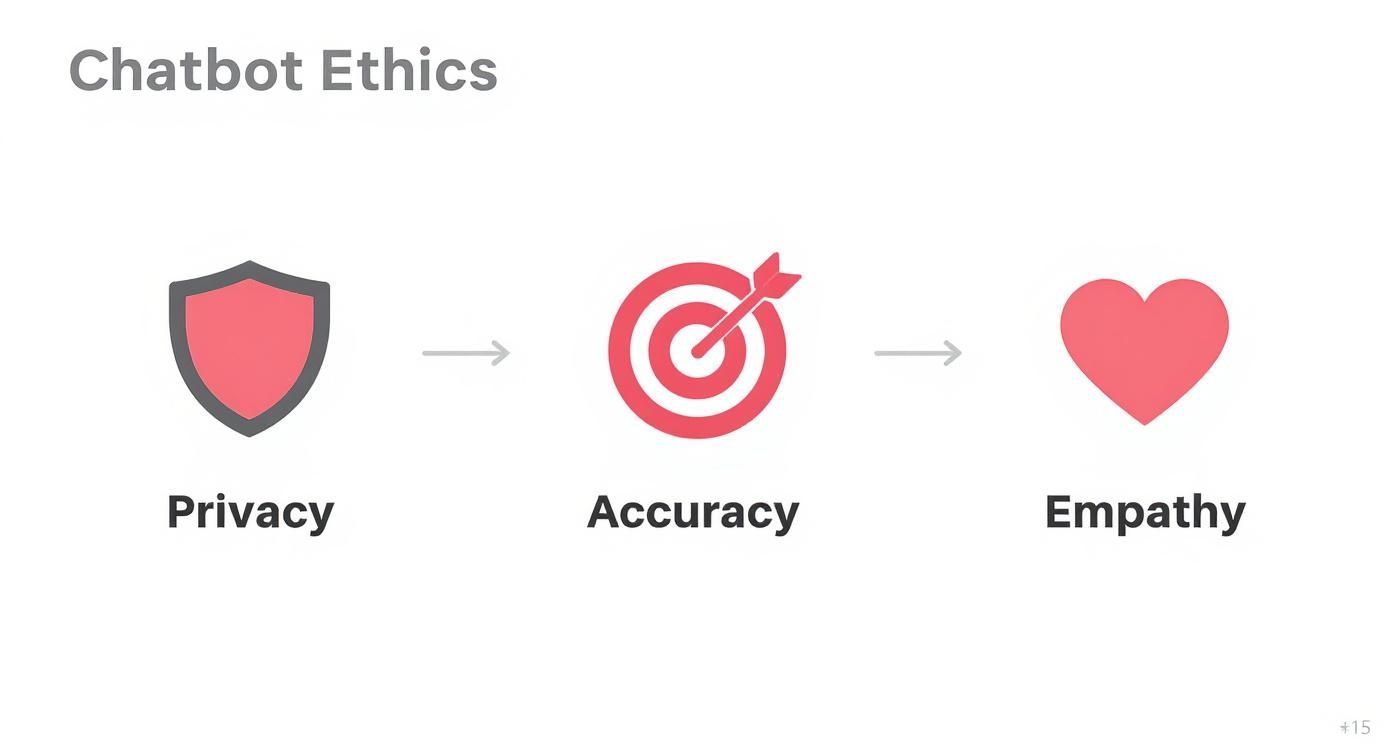
It’s a great reminder that while the tech is impressive, it’s the human side of care that ultimately matters most.
A Critical Part of Modern Healthcare Infrastructure
Chatbots aren't just a cool feature anymore. They're quickly becoming a foundational piece of the puzzle for any healthcare organization that wants to keep up. Think of them as the digital front door to a clinic or hospital—always open, always ready to help.
The explosive market growth isn't just about the technology itself. It’s a direct response to a healthcare system that needs to be more responsive, accessible, and patient-centric. Chatbots are a practical tool to help achieve that mission.
This makes them a strategic investment, not just another line item on the IT budget. They’re a key part of the larger shift toward a more digital approach to medicine. To get a better sense of where this is all heading, it's worth exploring the top AI applications in healthcare to see how chatbots fit into the bigger picture. In today's world, adopting this technology is becoming less of an option and more of a necessity.
What's Next for AI Conversations in Health?
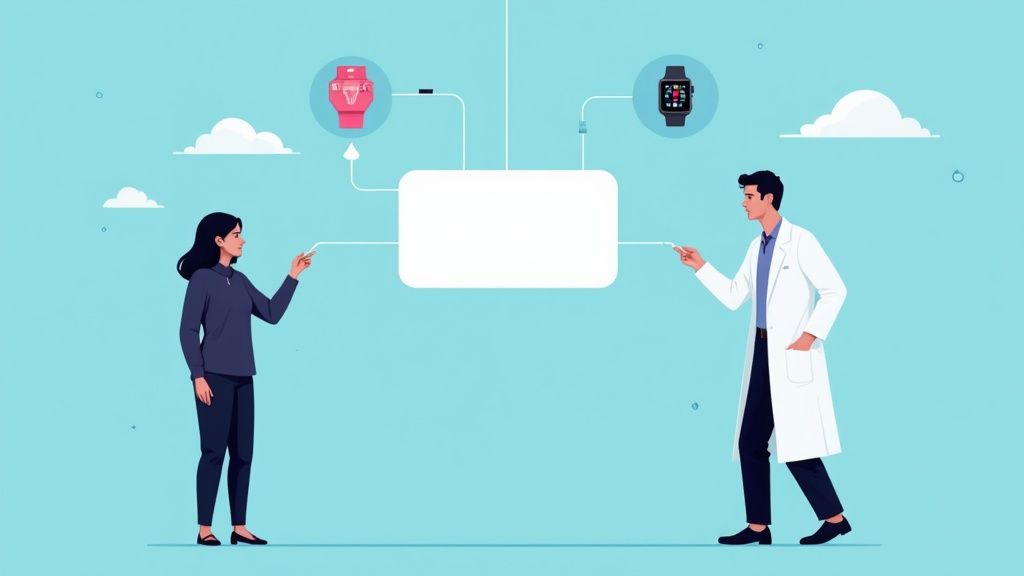
We're really just scratching the surface of what chatbots in healthcare can do. Looking ahead, the next generation of AI assistants will be less like a simple Q&A bot and more like a true partner in a patient's wellness journey. The big change is coming from more sophisticated generative AI, which will make these conversations feel not just helpful, but genuinely personal and even empathetic.
Think about a chatbot that does more than just ping a diabetic patient to check their blood sugar. Imagine one that actually understands their health patterns over time. By linking up with wearable tech like smartwatches and continuous glucose monitors, these future assistants can offer proactive advice in real-time, using live data to guide patients. It’s a powerful way to get ahead of chronic disease management before minor issues snowball into major problems.
Deeper Personalization and a Touch of Empathy
The next real challenge—and opportunity—for healthcare chatbots is emotional intelligence. Today's AI can mimic empathy, but the goal is to build systems that can genuinely interpret the tone, sentiment, and emotional undercurrents in a patient's messages. This would open the door for far more compassionate and supportive interactions, which is especially critical in sensitive areas like mental healthcare.
The real vision here is a seamless collaboration between human and machine. AI assistants will handle the continuous monitoring and routine check-ins, freeing up doctors and nurses to focus their expertise on complex decisions and building that all-important human connection with their patients.
This change will make healthcare feel less like a series of disconnected appointments and more like an ongoing conversation. The chatbot becomes a steady, reliable companion on a person's path to better health.
A Bigger Role in Mental and Vocal Health
Mental health is one area where we'll see massive growth. Future AI will be able to offer more sophisticated, therapy-like guidance, helping people manage anxiety or work through coping strategies with interactive exercises.
At the same time, voice technology is becoming a bigger piece of the puzzle. The sound of our voice can actually reveal a lot, with certain vocal biomarkers hinting at stress or even depression. As this tech gets better, it will shape how conversational AI works. If you're curious about this side of things, the field of AI voice recognition in healthcare is fascinating and packed with potential.
Ultimately, all these advancements are about building a system that puts the patient first. By weaving intelligent chatbots into our daily lives, we can make the entire healthcare experience more accessible, proactive, and truly personal. These tools aren't just a gimmick; they're on track to become a core part of modern medicine.
Frequently Asked Questions
It's natural to have questions about how chatbots fit into healthcare, especially when it comes to safety, privacy, and their relationship with doctors and nurses. Let's clear up some of the most common ones.
Are Healthcare Chatbots Safe for Medical Advice?
This is the big one, and the answer is simple: no. A chatbot should never be your doctor.
These tools are built for support, not diagnosis. They are perfectly safe and incredibly helpful for things like scheduling an appointment, checking clinic hours, or getting a reminder to take your medication.
But for a diagnosis or treatment plan? That's a job for a human. Always talk to a qualified healthcare professional for medical advice.
The best healthcare chatbots know their limits. They're designed with built-in safety features, like clear disclaimers, and are programmed to hand you off to a real person or emergency services the moment your question gets serious or complex.
Think of them as a helpful front-desk assistant, not a physician.
How Do Chatbots Protect My Private Health Information?
Patient privacy is everything. Any chatbot used in a healthcare setting, particularly in the U.S., must comply with the Health Insurance Portability and Accountability Act (HIPAA). This isn't just a guideline; it's a strict federal law.
To meet these standards, chatbots rely on multiple layers of security:
- Data Encryption: Your conversations are scrambled from end to end, making them unreadable to anyone without authorization, both while being sent and while stored.
- Secure Infrastructure: The servers and systems running the chatbot are hardened against cyberattacks and unauthorized access.
- Access Controls: Strict rules ensure only vetted personnel can ever see conversation data, keeping your information confidential.
The key is to only interact with chatbots from trusted hospitals or clinics.
Will Chatbots Replace Doctors and Nurses?
Not a chance. The goal here isn't replacement—it's support.
Think of a chatbot as a super-efficient assistant for a medical team. It can handle the routine, administrative legwork and answer the same basic questions over and over again, freeing up clinicians for the work that truly requires their expertise.
By automating the simple stuff, chatbots give doctors, nurses, and medical staff more time to focus on complex patient care, critical thinking, and the human connection that's so essential to healing. They're a tool to make healthcare better, not to remove the people who provide it.
Ready to improve patient communication on your website? Yoonoo lets you build and deploy a smart AI chatbot in just five minutes, no coding required. Start for free and see how easy it is to provide instant, helpful answers. Get started today at https://yoonoo.ai.